An extinct species
Prionosuchus †
Prionosuchus plummeri
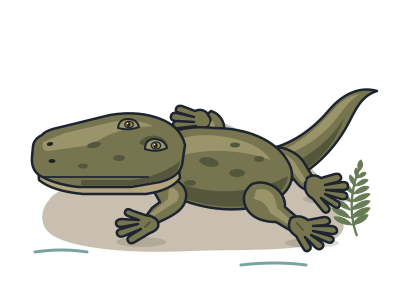
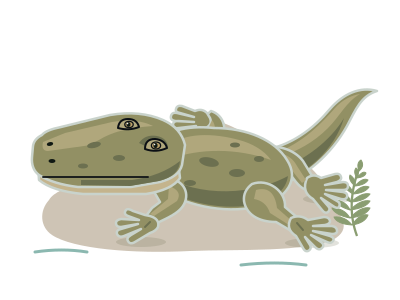
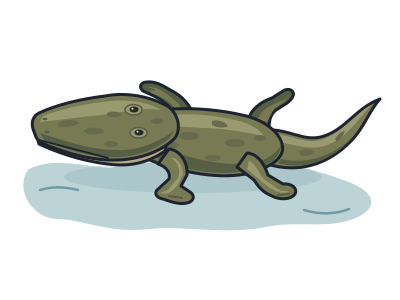
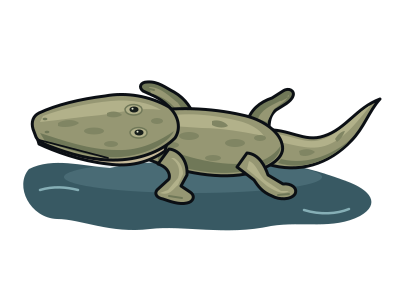
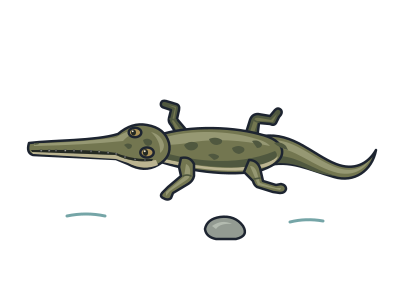
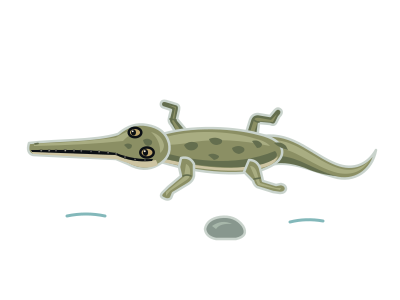
A crocodile-like giant on the amphibian side of the tree
Lived about 299–274 million years ago.
You and the prionosuchus meet in the Four-limbed animals branch, shown at about 350 million years ago (on 1 December, in a calendar from life's shared ancestor to today).
This giant amphibian relative had a crocodile-like snout, but it was not a crocodile. It belonged to the temnospondyls, an extinct group of amphibian relatives. A 2020 study favoured an Early Permian age for its rock formation, although older studies proposed later dates.
Its fossils came from what became north-eastern Brazil. Incomplete skulls and jaws showed an exceptionally long, narrow snout. Some body bones also helped researchers reconstruct its build by comparing it with smaller relatives. These comparisons suggested a long-bodied animal rather than something shaped like an enormous frog.
Its jaws suggested that it probably caught fish, though this was an interpretation of the bones, not directly preserved behaviour. Rocks from the same formation recorded lakes, rivers, wetlands and floodplains. These fossil discoveries offered pieces of its world, without revealing every detail of how it lived.
An enormous head
One exceptionally large individual's skull was estimated to have been about 1.6 metres long. That length included reconstructed missing parts.
Fish in the same rocks
The same rock formation preserved sharks and lungfish. Their presence did not establish which animals it ate.
Forests turned to stone
Petrified wood preserved evidence of extensive forests in the surrounding landscape.