An extinct species
Eryops †
Eryops megacephalus
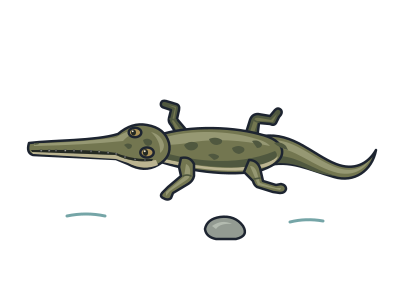
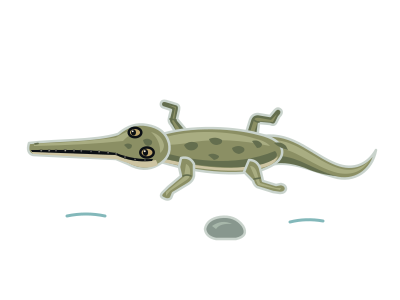
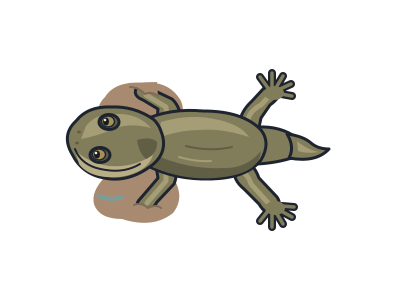
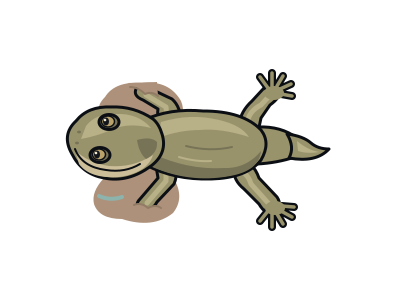
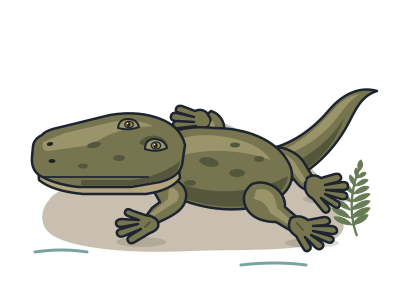
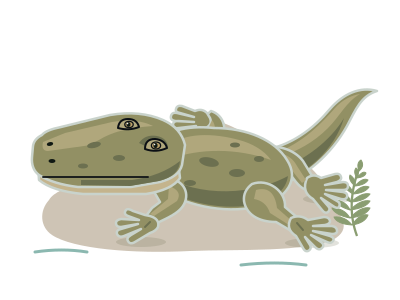
A crocodile-shaped amphibian relative from long before dinosaurs
Lived about 299–274 million years ago.
You and the eryops meet in the Four-limbed animals branch, shown at about 350 million years ago (on 1 December, in a calendar from life's shared ancestor to today).
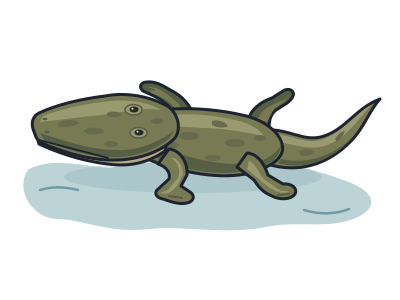
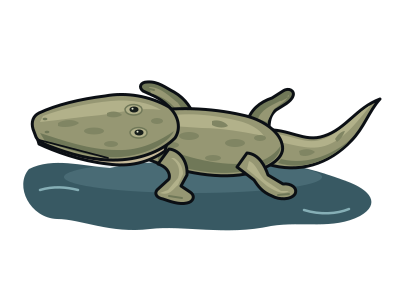
Eryops looked rather like a crocodile, but belonged to a different branch of the family tree. It was a temnospondyl, one of an ancient group of four-limbed animals traditionally called amphibians. That group also included Koolasuchus, another animal on this tree. Eryops was about two metres long—roughly the length of a bed. It lived in the early Permian, long before dinosaurs. London’s Natural History Museum placed it at about 295 to 285 million years ago.
It lived around freshwater and wetland margins in what became North America. Its broad, flattened head had eyes and nostrils set high up. That arrangement could have let it keep much of its body hidden underwater. Its pointed teeth suggested that it was a hunter. Particular hunting moves were inferred from its anatomy, not directly recorded by fossils.
Yet it was not helpless ashore. Its sturdy limb bones had large attachment points for muscles, supporting movement on land. The familiar picture of an animal always lurking in a swamp left out this land-going side of its life.
Teeth overhead
Large teeth grew on the roof of its mouth as well as around its jaws.
Four front fingers
Modern anatomical reassessment supported four fingers on each front foot, despite some older five-fingered reconstructions.
More than fragments
Nearly complete skeletons preserved in three dimensions gave researchers detailed evidence of its body proportions.