An extinct species
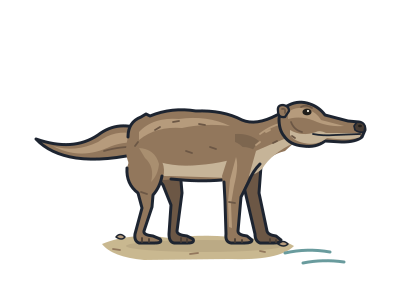
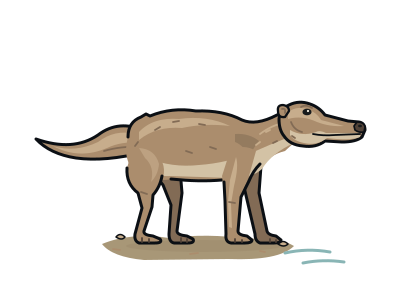
Pakicetus †
Pakicetus attocki
A wolf-sized animal with a whale’s ear bones
Lived about 50–48 million years ago.
You and the pakicetus meet in the Placental mammals branch, shown at about 95 million years ago (on 23 December, in a calendar from life's shared ancestor to today).
A wolf-sized animal with walking legs and whale-like ear bones: this was one of the earliest whales. It lived about 50 to 48 million years ago. Its four-legged body looked much more like a land mammal than a modern whale, but a bone surrounding its middle ear had a thickened inner wall that revealed its whale relationships.
Its ankle bones provided another family clue. They helped connect whales with even-toed hoofed mammals, the wider group that includes hippos, deer and pigs. Despite its size and shape, it was not a wolf. Its bones recorded a surprising link between walking mammals and the whale family.
Fossils came from river and floodplain deposits in what is now Pakistan, near an ancient sea. These were not fossils buried in the sea itself. The bones supported a reconstruction with four walking legs. Researchers also found signs of life in water, but exactly how it divided its time between land and water remained debated.
Meat on the menu
Chemical evidence indicated that it ate meat and sometimes fish.
Different teeth for different jobs
Its long snout held several tooth shapes, including pointed canine teeth and back teeth.
High-set eyes
Its eyes sat high on its skull, facing partly sideways and upwards.
Next to it on the tree
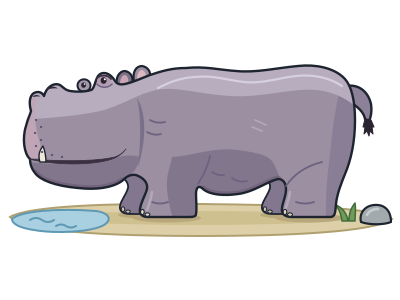
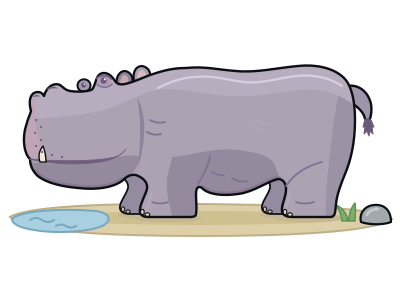
- Common hippopotamusCannot really swim; it gallops along the river bottom.
- AmbulocetusThe four-legged “walking whale” may have ambushed prey at the water’s edge; its ability to walk ashore is debated.
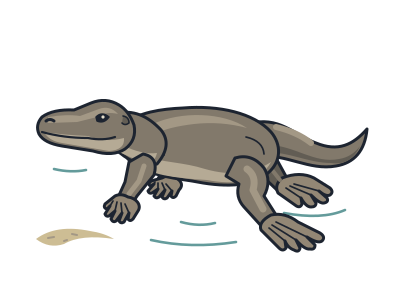
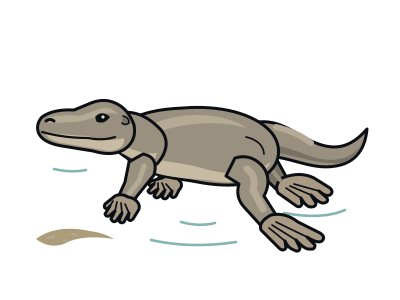
- BasilosaurusA long, serpent-like early whale, about 18 metres in reconstructed length, with tiny hind legs.
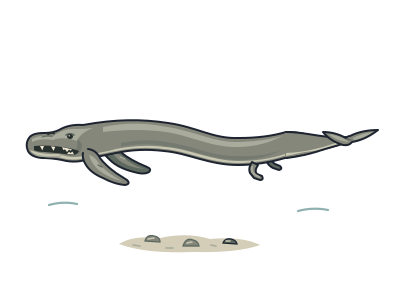
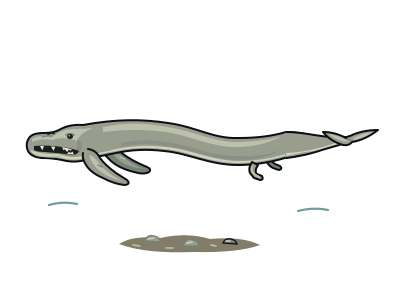
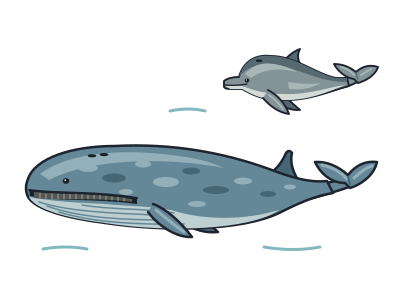
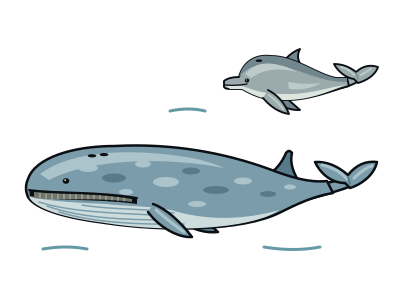
- Whales and dolphinsLiving whales have two main branches: baleen filter-feeders and toothed hunters, including dolphins.
- Pygmy hippopotamusA shy forest hippo, a tenth the weight of its river cousin, that hides in West African swamps.
- IndohyusA small deer-like animal with heavy bones for wading; it is among the closest relatives of whales.