An extinct species
Ambulocetus †
Ambulocetus natans
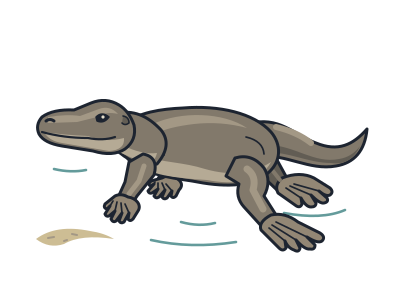
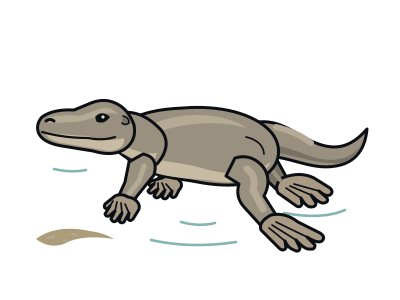
A whale relative that may have hunted like a crocodile
Lived about 49–47 million years ago.
You and the ambulocetus meet in the Placental mammals branch, shown at about 95 million years ago (on 23 December, in a calendar from life's shared ancestor to today).
The “walking whale” may have hunted like a crocodile, waiting in shallow water for animals to approach the water’s edge. But it was a mammal, not a reptile. It belonged to an early branch of the whale family, rather than being a proven direct ancestor of today’s whales.
It lived about 49 to 47 million years ago. Its fossils came from Pakistan, from rocks laid down along the warm coast of an ancient sea. At about 3 metres long, it was roughly the size of a large sea lion. Its long neck and movable wrists were very different from the bodies of living whales.
Bones and teeth offered clues to its life. Sharp back teeth suggested an animal diet. Its huge hind feet probably helped push it through water, although their webbing was inferred rather than preserved. The nickname “walking whale” did not settle how well it moved on land: even its ability to support its weight outside water remained debated.
Different front and back feet
It had five fingers on each front foot and four toes on each hind foot.
High-set eyes
Its eyes sat high on its skull but faced partly sideways.
Thick-walled bones
Its limb bones had unusually thick walls, consistent with spending much time in water.
Next to it on the tree
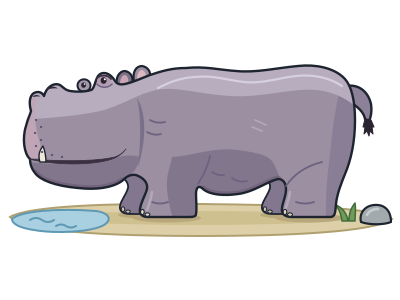
- Common hippopotamusCannot really swim; it gallops along the river bottom.
- PakicetusA wolf-sized land animal with a whale's ear bones: one of the first whales.
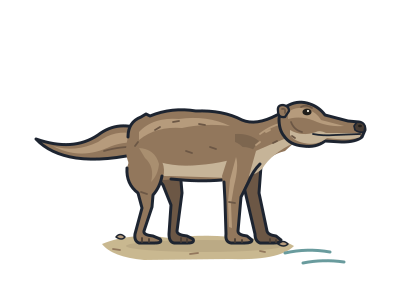
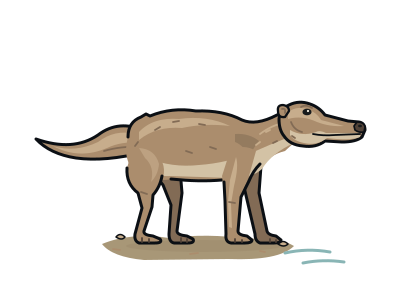
- BasilosaurusA long, serpent-like early whale, about 18 metres in reconstructed length, with tiny hind legs.
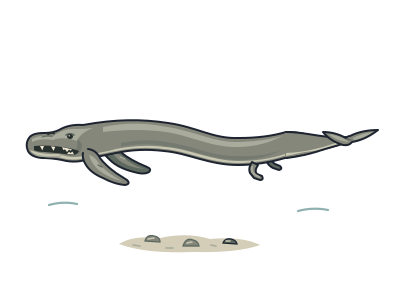
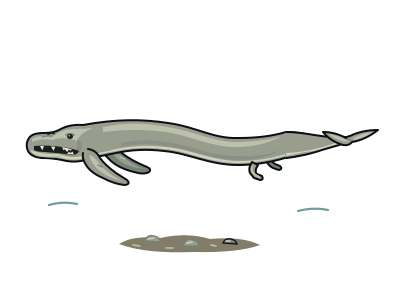
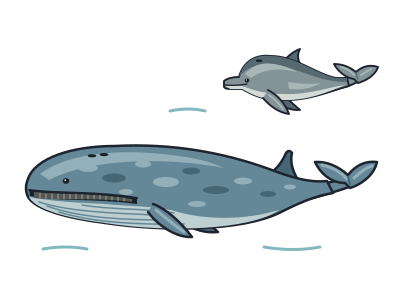
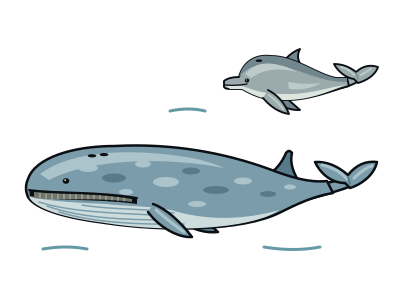
- Whales and dolphinsLiving whales have two main branches: baleen filter-feeders and toothed hunters, including dolphins.
- Pygmy hippopotamusA shy forest hippo, a tenth the weight of its river cousin, that hides in West African swamps.
- IndohyusA small deer-like animal with heavy bones for wading; it is among the closest relatives of whales.