An extinct species
Basilosaurus †
Basilosaurus cetoides
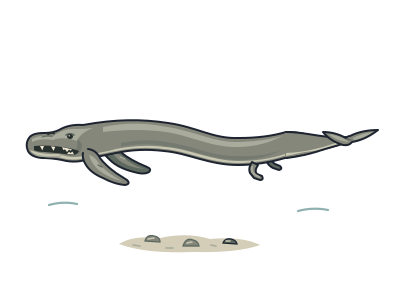
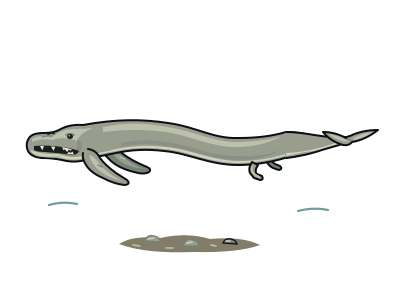
A serpent-like whale with tiny hind legs
Lived about 41–34 million years ago.
You and the basilosaurus meet in the Placental mammals branch, shown at about 95 million years ago (on 23 December, in a calendar from life's shared ancestor to today).
About 18 metres long—roughly the length of a bendy bus—this serpent-like whale still had tiny hind legs. It lived within the broad window of about 41 to 34 million years ago. Despite its snake-like outline, it was a mammal. Its rear legs were reminders of the whale family’s land-living past, not legs it could use to walk ashore.
Fossil bones showed that its hip bones had no bony connection to its backbone. Its tiny hind legs could not have supported its weight on land. Its front limbs formed paddle-like flippers with elbow joints. Evidence from fossils and tooth chemistry supported a life spent entirely in salt water. It inhabited seas over parts of what are now Alabama and Mississippi.
It belonged to an extinct early branch of the whale family. Its branch split off before the shared ancestor of all living whales and dolphins. That made it a relative, but not an established direct ancestor, of today’s whales. Its unusual body showed how different members of the whale family could look.
Fish on the menu
A skeleton found in Mississippi preserved partly digested fish bones: direct evidence that this whale ate fish.
Different teeth for different jobs
Its front teeth were pointed, while its flattened back teeth had several large points along their edges.
A misleading name
Its name meant ‘king lizard’. Early researchers initially mistook its remains for those of a giant reptile.
Next to it on the tree
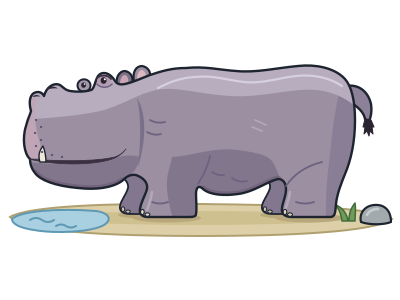
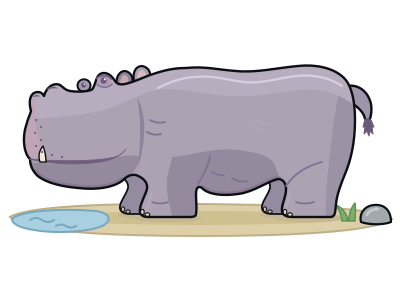
- Common hippopotamusCannot really swim; it gallops along the river bottom.
- PakicetusA wolf-sized land animal with a whale's ear bones: one of the first whales.
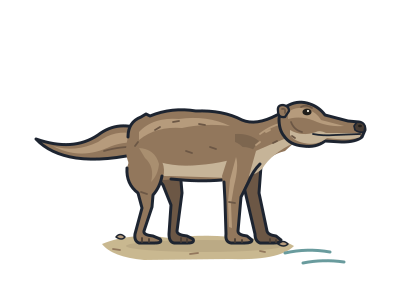
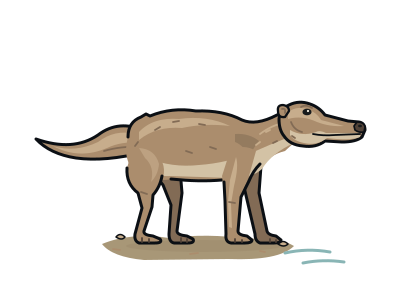
- AmbulocetusThe four-legged “walking whale” may have ambushed prey at the water’s edge; its ability to walk ashore is debated.
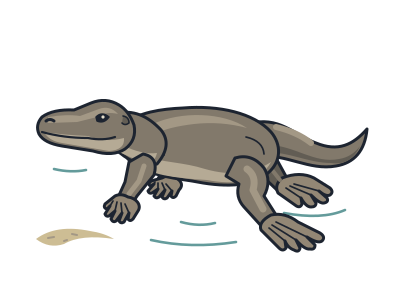
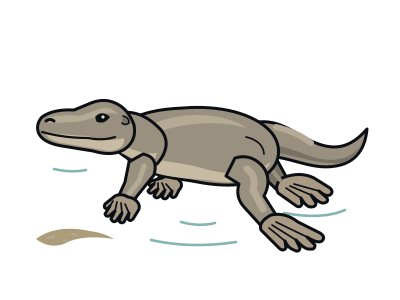
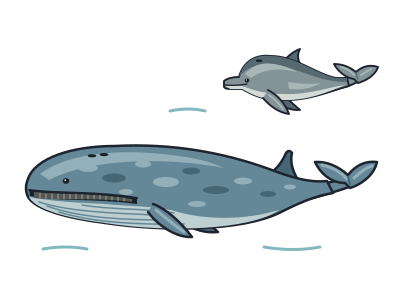
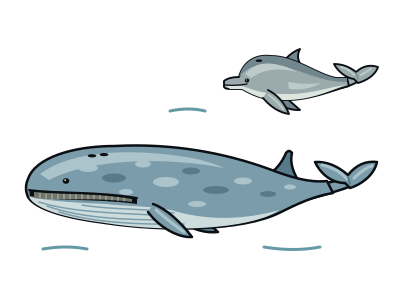
- Whales and dolphinsLiving whales have two main branches: baleen filter-feeders and toothed hunters, including dolphins.
- Pygmy hippopotamusA shy forest hippo, a tenth the weight of its river cousin, that hides in West African swamps.
- IndohyusA small deer-like animal with heavy bones for wading; it is among the closest relatives of whales.