A group of living things
Clownfish, cichlids and kin
Ovalentaria
Different waters, one surprising branch
This branch is shown at about 90 million years ago; its age is a rough estimate.
You and clownfish, cichlids and kin meet in the Bony fish and their descendants branch, shown at about 430 million years ago (on 24 November, in a calendar from life's shared ancestor to today).
Clownfish, cichlids and flying fish belong to one surprising branch of the fish family tree. They share a common ancestor, even though they can look very different and live in different kinds of water. Comparisons of DNA helped scientists uncover this connection.
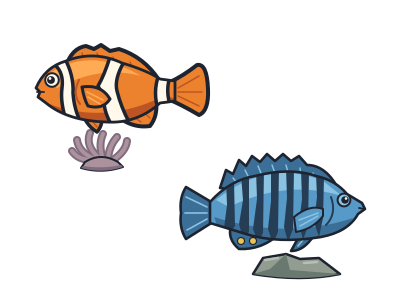
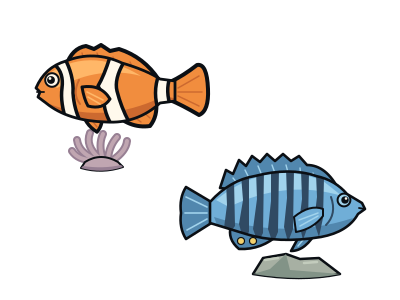
The clownfish pictured here lives on shallow tropical reefs and shelters among anemone tentacles, which help protect it from predators. The zebra mbuna, a cichlid, is native only to Lake Malawi in eastern Africa. One lives in the sea; the other lives in fresh water.
Many members of this wider branch lay eggs with fine, sticky threads that attach them to surfaces rather than letting them drift freely. But this is not a rule for everyone: surfperches and several other branches give birth to live young. The group also includes mullets, clingfishes, jawfishes and many blennies.
An egg-inspired name
The branch's scientific name comes from Latin words meaning ‘egg’ and ‘sticky’.
Fathers on duty
Male clownfish do most of the egg care, including fanning the eggs with their fins.
Teeth like tiny combs
Zebra mbuna brush algae and loose material from rocks with comb-like teeth. They also eat tiny organisms drifting in open water.
Inside clownfish, cichlids and kin
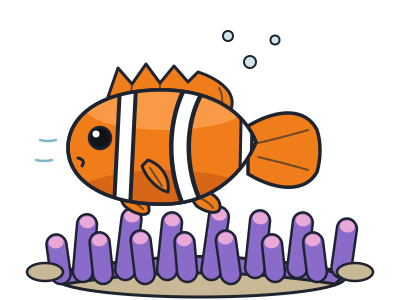
- ClownfishLives inside a stinging anemone, and can change from male to female.
- CichlidsCaring parents and fast evolvers: over 1,700 species, many in single African lakes.
- Guppies, killifish and flying fishSmall surface-loving fish, from livebearing guppies to flying fish and fish that survive in dried mud.
Next to it on the tree
- Flatfish, swordfish and kinFlatfish are cousins of swordfish and jacks, a link revealed only by DNA.
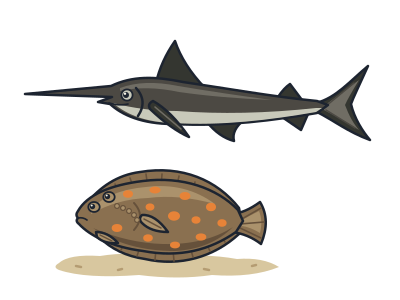
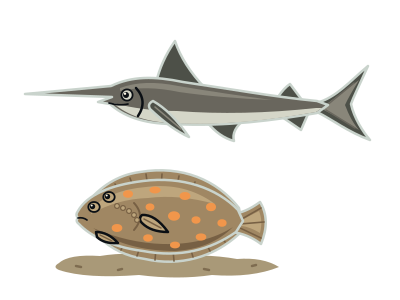
- Tunas and mackerelsStreamlined ocean racers built for nonstop swimming, many with fins that tuck into grooves.
- Seahorses and kinOdd-shaped fish with tube snouts or showy fins: seahorses, seadragons and dragonets.
- Gobies and cardinalfishSmall bottom-dwelling fish that make up one of the largest fish groups on reefs.
- Labyrinth fishes and snakeheadsFreshwater fish with an extra breathing organ in the head that lets them gulp air.
- Perch, wrasses, puffers and kinThe largest branch of spiny-finned fish, holding most reef fish and perch-like fish.