A species
Nine-banded armadillo
Dasypus novemcinctus
Four babies from one egg.
You and the nine-banded armadillo meet in the Placental mammals branch, shown at about 95 million years ago (on 23 December, in a calendar from life's shared ancestor to today).
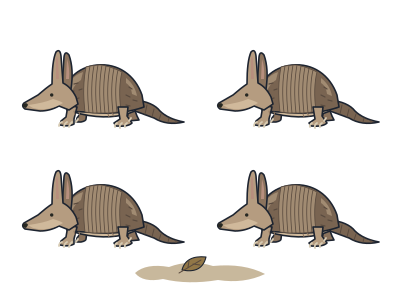
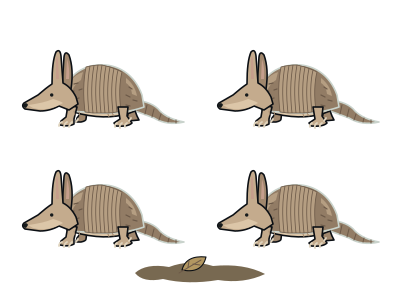
A mother nine-banded armadillo almost always gives birth to four genetically identical babies. They develop from a single fertilised egg and are all the same sex. Think of identical twins, but with four babies instead of two. Adults usually live alone, yet young littermates often search for food together during their first summer.
Despite its armoured appearance, this animal belongs to the same major mammal group as sloths and anteaters. One family connection is hidden inside: unusual extra joints between backbones were an ancestral feature of this wider group. Living tree sloths have lost them. On the outside, the armadillo has a low, rounded body, large upright ears and a long, armoured tail.
Its pointed snout and keen sense of smell help it find food. Strong claws dig into soil for meals that include beetles, ants and termites. It also eats fruit and other small animals. It is mainly active around dusk and at night, though it sometimes comes out during daylight.
Armour afloat
It can swim: its armour does not keep it confined to dry land.
Uneven toe count
Each front foot has four toes, while each hind foot has five.
One litter a year
Females normally produce one litter each year.
Next to it on the tree
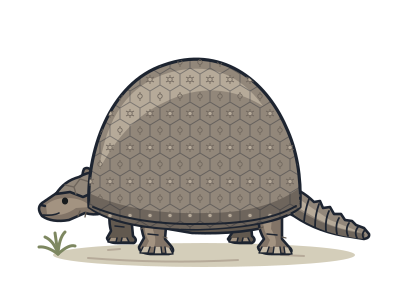
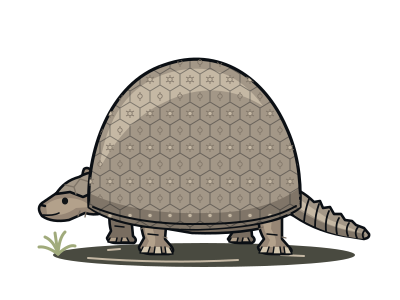
- GlyptodonA small-car-sized armadillo relative with a solid dome of bony armour.
- Pink fairy armadilloA palm-sized pink armadillo that "swims" through sand, with a flat plate on its rump.
- Giant armadilloThe largest living armadillo, with a huge middle claw for tearing open termite mounds.
- Brazilian three-banded armadilloOne of the few armadillos that can roll into a complete armoured ball.