An extinct species
Meganeura †
Meganeura monyi
Hawk-wide wings above ancient coal forests
Lived about 305–299 million years ago.
You and the meganeura meet in the Two-sided animals branch, shown at about 580 million years ago (on 11 November, in a calendar from life's shared ancestor to today).
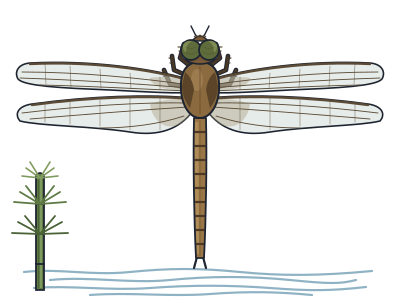
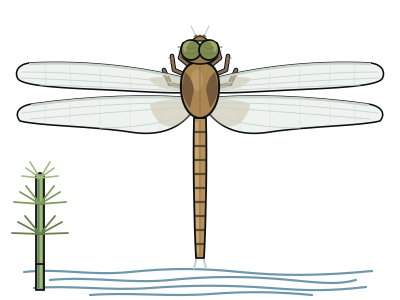
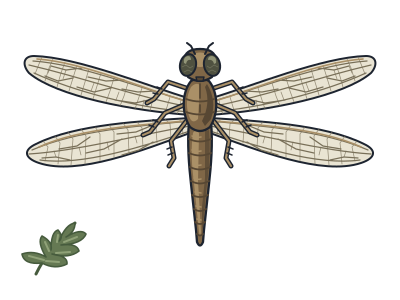
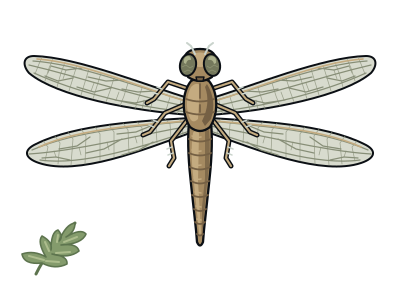
A griffinfly with a wingspan like a small hawk’s, this insect lived in oxygen-rich coal forests about 305 to 299 million years ago. Reconstructions suggested a wingspan of about 70 centimetres. The comparison was from wingtip to wingtip, not weight. It was a relative of dragonflies, but belonged outside the group containing today’s dragonflies and damselflies—not simply a modern dragonfly made enormous.
Its fossils came from Commentry in central France. When it lived, this area was covered by forests near the equator. Buried plant remains helped form the coal deposits associated with its discovery. Fossils preserved wing impressions and some hard body parts, rather than a complete, three-dimensional insect.
Estimates suggested that the air of its time contained more than 30% oxygen, compared with about 21% today. Like other insects, it would have breathed through branching tubes rather than lungs. Extra oxygen may have helped support its large flying body. Other factors may also have mattered. Small insects lived alongside the giants.
A lengthy body
One museum reconstruction estimated its body length at nearly 40 centimetres.
A town’s emblem
Commentry adopted this fossil insect as its emblem.
Even larger relatives
Some later griffinfly relatives from North America were slightly larger.