A species
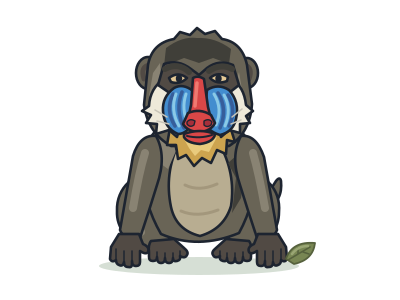
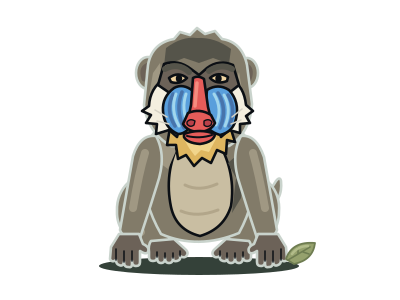
Mandrill
Mandrillus sphinx
A red-and-blue face in the monkey family
You and the mandrill meet in the Primates branch, shown at about 70 million years ago (on 25 December, in a calendar from life's shared ancestor to today).
Compare with something elseWith a red-and-blue face, the mandrill is one of the most colourful mammals. Adult males have bright red noses and lips, blue-to-purple ridges beside the nose, and golden beards. It may look like a brightly painted baboon, but its closest relative is the drill. Like baboons, mandrills are Old World monkeys, not apes.
The brightest faces belong to adult males, which are also the largest living monkeys. Females and youngsters are smaller and less colourful. A mandrill has a muscular body and a very short tail, rather than the long tail you might expect from its baboon-like appearance.
Wild mandrills live in the dense tropical forests of west-central Africa. They travel and find food on the ground, then sleep in trees at night. Their varied meals include fruit, seeds, leaves, roots, fungi, insects and some small animals.
Food to go
Cheek pouches let mandrills collect food quickly and carry it somewhere safer to eat.
A friendly grin
Showing teeth is not always a threat. A particular tooth-showing grin can be a friendly greeting.
Born to hold on
A newborn mandrill can cling to its mother's belly immediately.
Next to it on the tree
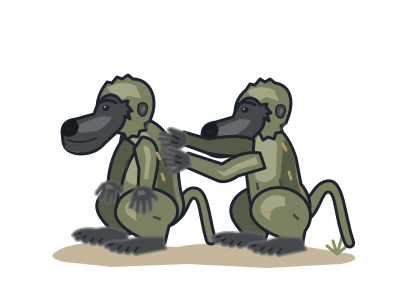
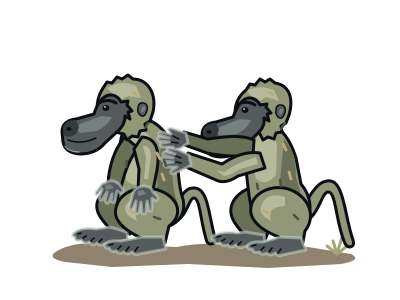
- Olive baboonOlive baboons live in big troops where grooming, friendships and family ties shape daily life.
- Japanese macaqueThe "snow monkey" that bathes in hot springs through winter.
- Proboscis monkeyMales grow a huge droopy nose that makes their honking calls louder.
- GeladaA grass-eating monkey of the Ethiopian highlands with a bright red patch on its chest.
- Rhesus macaqueA monkey that thrives in cities and gave its name to the Rh blood-group factor.
- Golden snub-nosed monkeyA golden-furred monkey with a blue face that huddles through snowy Chinese mountain winters.