A species
Japanese macaque
Macaca fuscata
A winter bather with baboon relatives.
You and the japanese macaque meet in the Primates branch, shown at about 70 million years ago (on 25 December, in a calendar from life's shared ancestor to today).
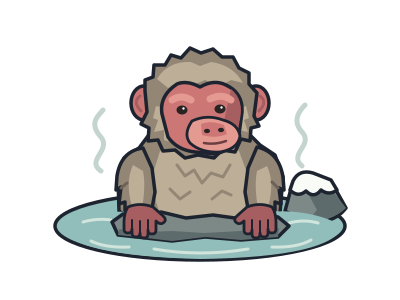
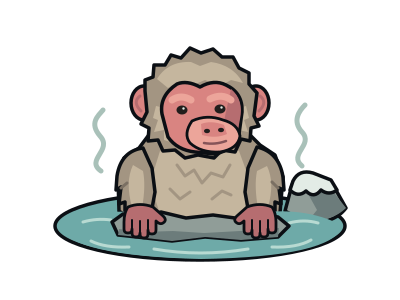
Compare with something elseThe “snow monkey” soaking in a hot spring is a Japanese macaque. At Jigokudani in Japan, some of these monkeys bathe even in winter. They belong to the Old World monkey family, alongside baboons and mandrills. A very short tail does not make them apes.
Hot-spring bathing is a local tradition, not a habit of every Japanese macaque. At Jigokudani, the park built a separate bath for the monkeys. Bathing has continued across generations, but even here some members of the group do not join in.
Despite their nickname, these monkeys live in warm southern forests as well as snowy northern mountains. Their coats are grey-brown to yellowish brown, with pinkish-red faces. Monkeys in snowy northern forests may eat bark and old leaves when richer foods are scarce. They also huddle together for warmth, forming larger sleeping groups as temperatures fall.
Family ties
Females generally stay in their birth group, while males leave as they mature.
More than a tidy coat
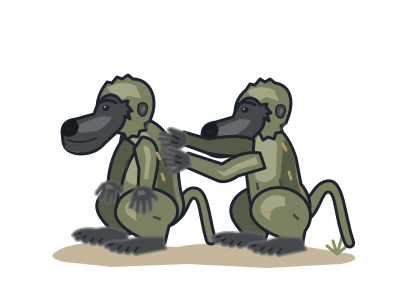
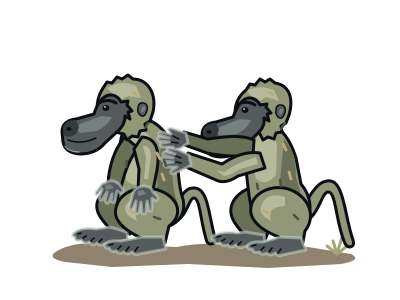
Picking through one another’s fur helps maintain social bonds, especially between related females.
A close passenger
Mothers usually have one infant, which rides against the belly or on the back.
Next to it on the tree
- Olive baboonOlive baboons live in big troops where grooming, friendships and family ties shape daily life.
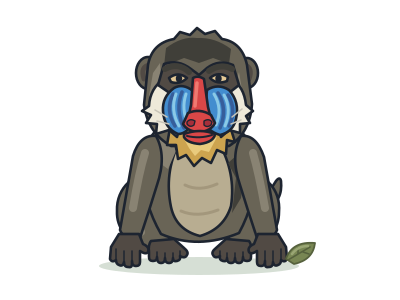
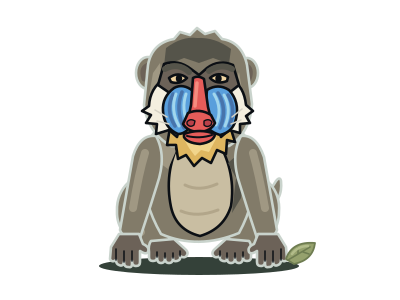
- MandrillThe most colourful mammal, with a red-and-blue face.
- Proboscis monkeyMales grow a huge droopy nose that makes their honking calls louder.
- GeladaA grass-eating monkey of the Ethiopian highlands with a bright red patch on its chest.
- Rhesus macaqueA monkey that thrives in cities and gave its name to the Rh blood-group factor.
- Golden snub-nosed monkeyA golden-furred monkey with a blue face that huddles through snowy Chinese mountain winters.