A species
Olive baboon
Papio anubis
Big troops, close friends and powerful family ties.
You and the olive baboon meet in the Primates branch, shown at about 70 million years ago (on 25 December, in a calendar from life's shared ancestor to today).
Compare with something elseOlive baboons live in big troops with complex friendships and family ties. Groups can contain about 15 to 150 animals, including several adult males, females and youngsters—not just one male and his family. They belong to the same Old World monkey family as Japanese macaques and mandrills. A mandrill is a relative, not simply a colourful baboon.
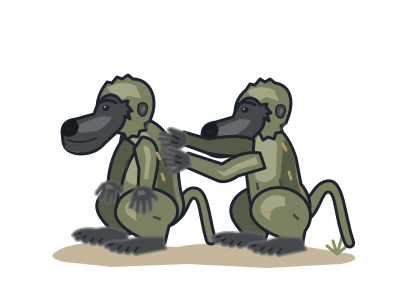
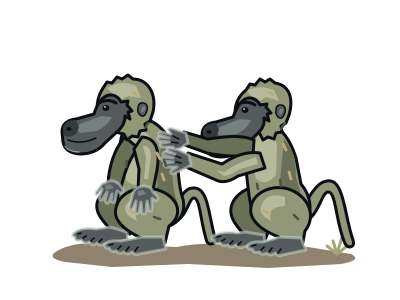
For these monkeys, picking through a companion’s fur is more than cleaning. This grooming also strengthens social bonds. Females usually stay in their birth troop throughout life, while males leave to join other troops. A female’s place in the social order depends strongly on her family: daughters generally rank just below their mothers. Female relatives support one another in disputes, with even grandmothers helping granddaughters.
Friendships cross those family lines too. Male and female friends groom, travel and feed together, and sleep nearby. Males may also offer protection or help with infants. Older males sometimes team up to challenge a rival that neither could defeat alone. Life in a troop depends on relationships as well as strength.
Food to go
Cheek pouches let olive baboons store food while moving between feeding places.
Not an extra hand
Their long tail cannot grip branches.
A changing coat
Infants have black coats that change to adult olive-grey by about six months.
Next to it on the tree
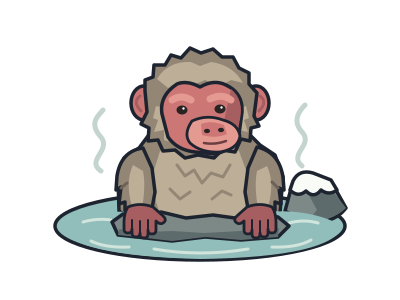
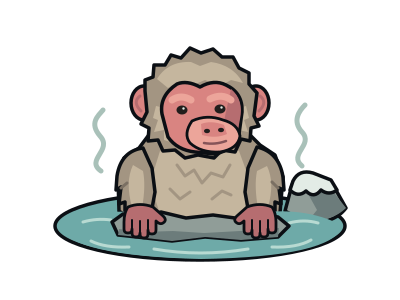
- Japanese macaqueThe "snow monkey" that bathes in hot springs through winter.
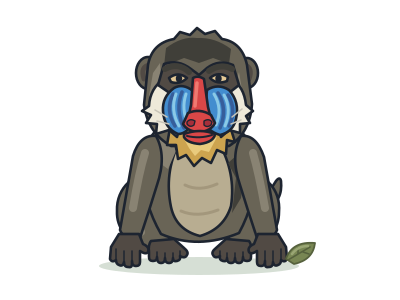
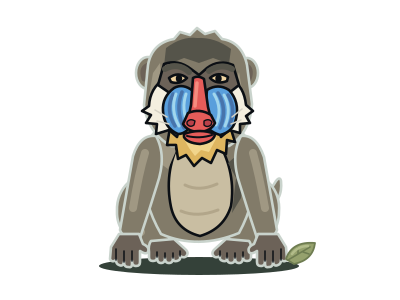
- MandrillThe most colourful mammal, with a red-and-blue face.
- Proboscis monkeyMales grow a huge droopy nose that makes their honking calls louder.
- GeladaA grass-eating monkey of the Ethiopian highlands with a bright red patch on its chest.
- Rhesus macaqueA monkey that thrives in cities and gave its name to the Rh blood-group factor.
- Golden snub-nosed monkeyA golden-furred monkey with a blue face that huddles through snowy Chinese mountain winters.