A species
Ring-tailed lemur
Lemur catta
The sunbathing, stink-fighting cousin of apes.
You and the ring-tailed lemur meet in the Primates branch, shown at about 70 million years ago (on 25 December, in a calendar from life's shared ancestor to today).
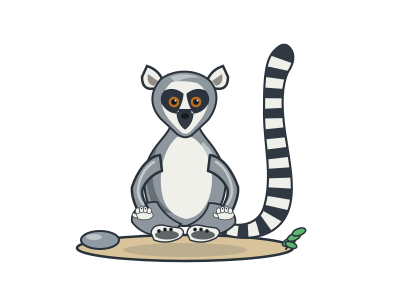
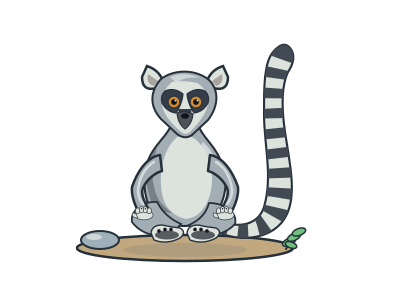
Compare with something elseThis distant cousin of apes starts cool mornings sitting upright with arms spread, warming its pale belly in the sun like a yoga pose. Male ring-tailed lemurs also hold 'stink fights', rubbing smelly scent from their wrists and shoulders onto their tails and waving them at rivals.
It is a primate, but it is not a monkey or an ape. It lives wild only in southern and south-western Madagascar. It has a cat-sized body and a longer tail with about 13 black and white rings. The tail cannot grip, but the troop holds tails up like flags when travelling to stay together.
Groups of about six to thirty usually live together, with a female in charge. They walk on all fours on the ground as well as climbing in trees. They eat mostly fruit, leaves and flowers. They also eat insects and other small animals.
Two tongues
Under its main tongue is a tiny second tongue. It cleans the front teeth, which work like a comb for grooming fur.
Long life
Wild animals live about 16 to 18 years. Those in human care can live longer.
One of a kind
It is the only living member of its close group. In Madagascar people call it maki or hira.
Next to it on the tree
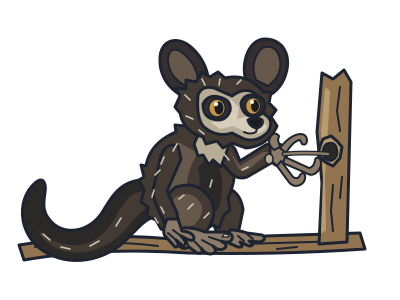
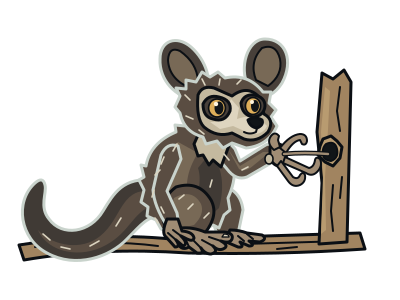
- Aye-ayeTaps on wood and fishes out grubs with a long, skinny middle finger.
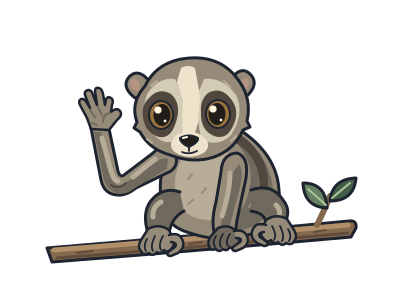
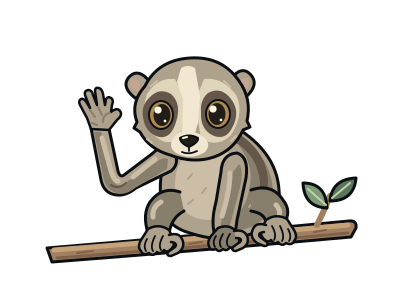
- Sunda slow lorisA slow loris with a venomous bite, one of several venomous species in its primate group.
- Verreaux’s sifakaA lemur that crosses open ground by bouncing sideways on its back legs, as if dancing.
- IndriThe largest living lemur, whose families sing eerie duets heard kilometres away.
- Grey mouse lemurA primate small enough to sit in your palm, with huge eyes for night foraging.
- Northern lesser galagoA "bushbaby" that leaps several metres between branches and folds its ears when resting.