A species
Aye-aye
Daubentonia madagascariensis
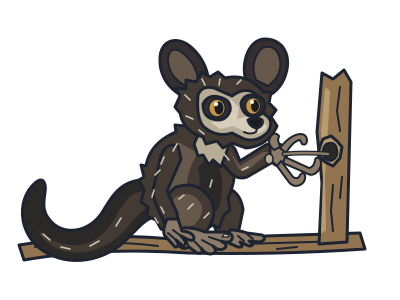
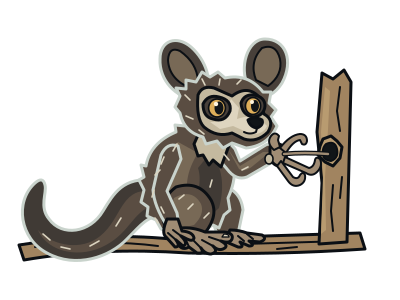
A lemur with a built-in grub hook.
You and the aye-aye meet in the Primates branch, shown at about 70 million years ago (on 25 December, in a calendar from life's shared ancestor to today).
Compare with something elseThe aye-aye taps on wood and fishes out grubs with a long, skinny middle finger. It listens as it taps, searching for hidden feeding sites. Its strong front teeth gnaw an opening in the wood. Only then does the flexible finger reach inside and hook out a grub: the finger is not a drill.
Despite its squirrel-like looks, this is a lemur, not a rodent. It belongs to the primates, alongside other lemurs and lorises. The aye-aye branch is the sister group to all other living lemurs. That makes it more closely related to a ring-tailed lemur than to a slow loris.
Wild aye-ayes live only in Madagascar. They search for food at night in rainforests, seasonally dry forests and some farming areas. Grubs are not their only food: they also eat seeds, fruit and nectar. The species is Endangered, with forest loss among its threats.
Daytime hideaway
During daylight, aye-ayes sleep above ground in nests or tangles of branches.
A bigger-looking coat
When excited or agitated, an aye-aye can raise its long, pale hairs and look much larger.
One youngster at a time
Females generally have one youngster every two to three years. Births are not limited to one season.
Next to it on the tree
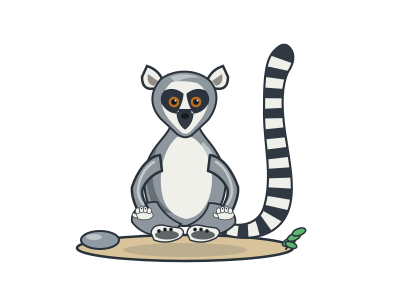
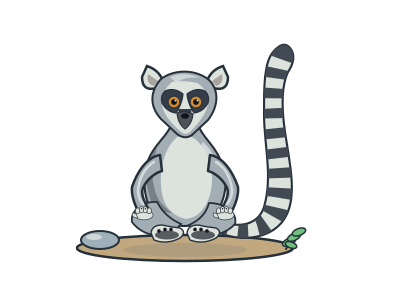
- Ring-tailed lemurSunbathes in a yoga pose and holds 'stink fights' with its tail.
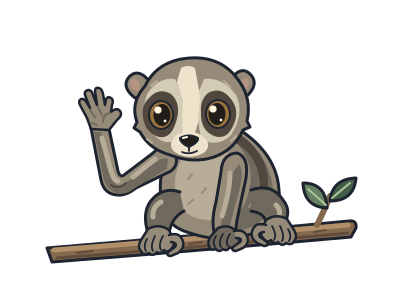
- Sunda slow lorisA slow loris with a venomous bite, one of several venomous species in its primate group.
- Verreaux’s sifakaA lemur that crosses open ground by bouncing sideways on its back legs, as if dancing.
- IndriThe largest living lemur, whose families sing eerie duets heard kilometres away.
- Grey mouse lemurA primate small enough to sit in your palm, with huge eyes for night foraging.
- Northern lesser galagoA "bushbaby" that leaps several metres between branches and folds its ears when resting.