A group of living things
Rabbits, hares and pikas
Lagomorpha
A second helping from the same meal
This branch is shown at about 50 million years ago; its age is a rough estimate.
You and rabbits, hares and pikas meet in the Primates, rodents and rabbits branch, shown at about 90 million years ago (on 24 December, in a calendar from life's shared ancestor to today).
Rabbits, hares and pikas eat their own droppings to get more goodness from plants. But not just any droppings: they make soft, nutrient-rich ones that they swallow again, alongside dry pellets that they normally leave behind. This second trip through the gut helps them collect nutrients that would otherwise be lost. It is a way of getting more from the same meal.
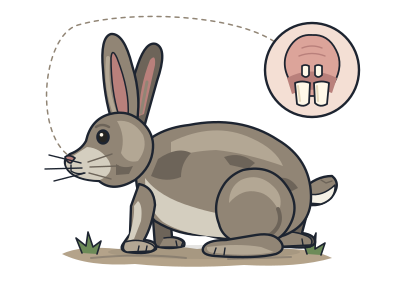
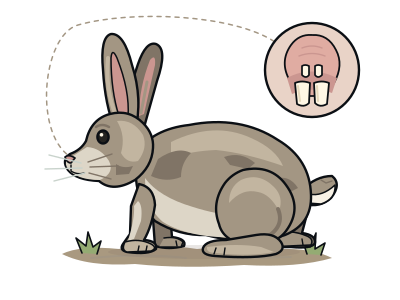
Despite their gnawing teeth, these animals are not rodents. They form the rodents’ sister group: the two branches are each other’s closest relatives on this part of the tree. One tiny clue separates them. Rabbits, hares and pikas have an extra pair of small, peg-like upper front teeth tucked behind the larger pair.
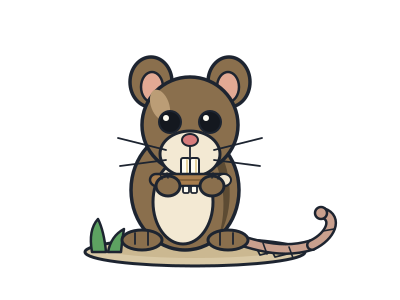
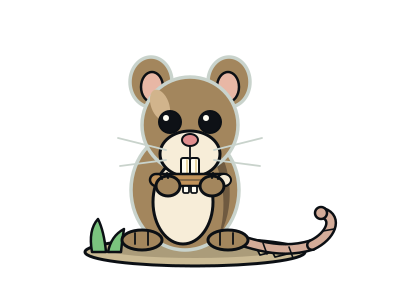
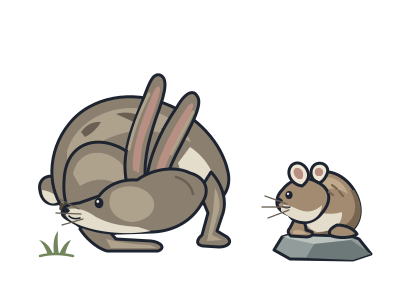
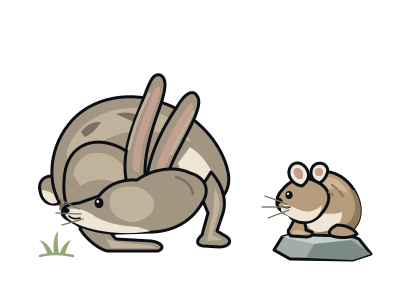
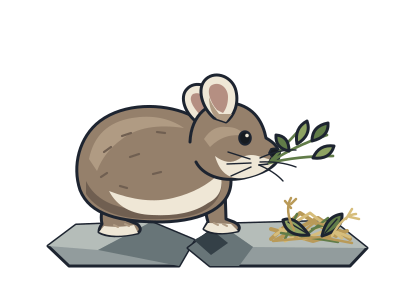
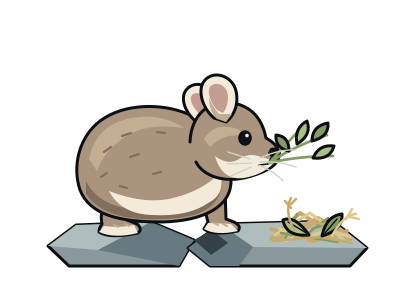
This family comes in more than the familiar rabbit shape. A wild European rabbit has long ears, powerful hind legs and a short, white-bottomed tail. An American pika is much smaller. It lives among broken rocks beside mountain meadows in western North America.
Teeth that keep growing
Their front teeth continue growing throughout life.
One wild ancestor
All domestic rabbit breeds descend from the European rabbit, despite their different sizes, coats and ear shapes.
Winter food stores
American pikas gather plants into drying piles for winter. They do not hibernate, staying active beneath the snow.
Inside rabbits, hares and pikas
- European rabbitHas a second, tiny pair of upper front teeth hidden behind the first.
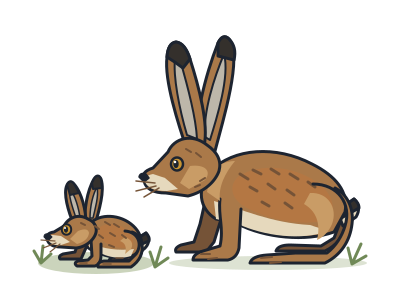
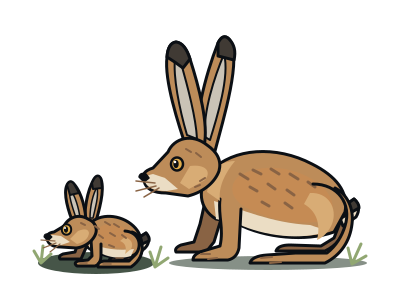
- European hareBorn furry with eyes open, and "boxes" in spring fields.
- American pikaA round-eared mountain hay-maker that dries grass piles for winter.
- Snowshoe hareTurns white for winter and runs over snow on oversized furry feet.