A species
European hare
Lepus europaeus
Born furry, with eyes open—and ready for life above ground.
You and the european hare meet in the Primates, rodents and rabbits branch, shown at about 90 million years ago (on 24 December, in a calendar from life's shared ancestor to today).
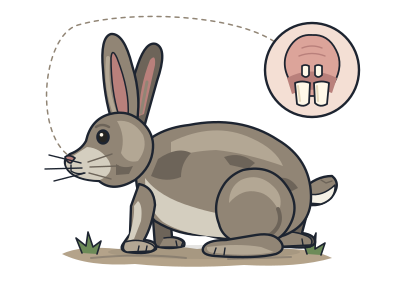
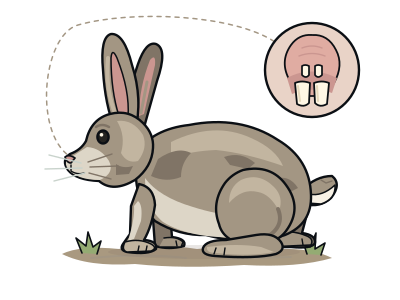
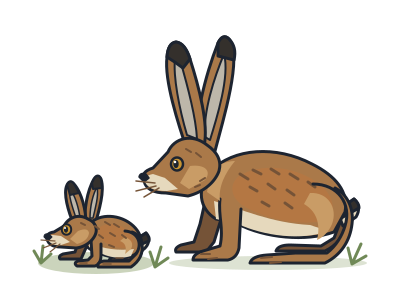
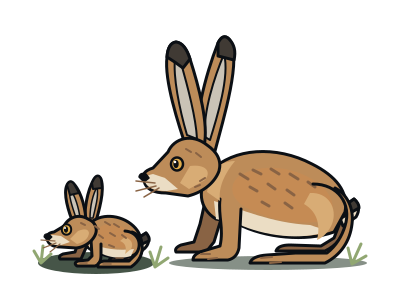
Born furry and with their eyes open, young European hares can move around soon after birth. These youngsters are called leverets. Their European rabbit relatives start life blind and almost hairless, tucked into a sheltered nest inside a burrow. A hare is not simply an oversized rabbit: it is a different species, with longer ears and longer, more powerful back legs.
In spring fields, you may spot two hares standing on their back legs and striking with their front paws. This is their famous boxing display. It is often a female fending off a male’s unwanted attention, rather than two males competing.
European hares rest above ground in shallow hollows instead of digging rabbit-style burrows. Open grassland, pasture and crop fields are their usual surroundings, especially where bushes or field edges offer cover. They are mainly active around dusk and at night, and stay active throughout the year.
A brief milk visit
A mother usually returns to feed her leverets milk just once every 24 hours. A youngster hiding alone is not necessarily abandoned.
More than grass
Their food includes the bark of young trees and bushes, as well as growing vegetation.
Amber eyes
European hares have amber eyes, unlike the brown eyes of European rabbits.