An extinct species
Iguanodon †
Iguanodon bernissartensis
A misplaced thumb spike, and a coal mine full of skeletons
Lived about 126–122 million years ago.
You and the iguanodon meet in the Amniotes branch, shown at about 320 million years ago (on 4 December, in a calendar from life's shared ancestor to today).
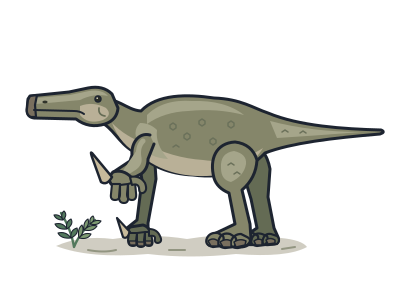
Its thumb spike was first put on its nose by people rebuilding the animal from fossils. More complete skeletons showed that the spike belonged on its hand instead. Starting in 1878, about thirty nearly complete skeletons were found in a coal mine at Bernissart in Belgium, about 320 metres underground.
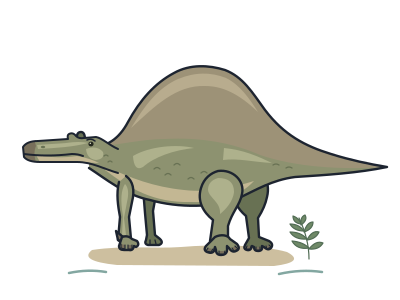
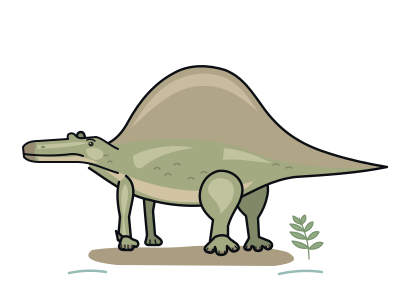
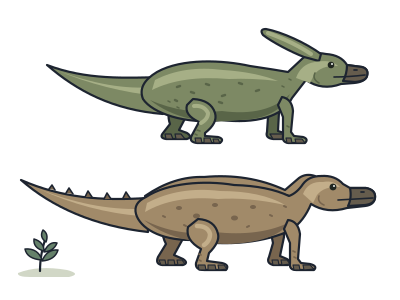
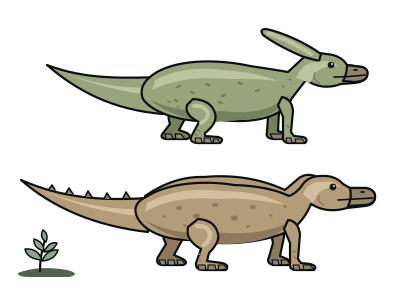
This plant-eating dinosaur lived about 126 to 122 million years ago. Its relatives included Ouranosaurus and the duck-billed dinosaurs, within a wider group of plant-eating dinosaurs. Adults were about as long as a bus. Fossils of this species were found in what are now England, Belgium, Germany and Spain.
Many Bernissart skeletons still had bones joined in their original arrangement, giving scientists unusually complete evidence of their bodies. Each hand had five fingers, with three strong middle fingers that supported weight. Fossils found alongside them included freshwater fish, turtles, ferns and conifers. Together, these remains pointed to a warm, wet setting at Bernissart.
Fool’s gold
Some miners initially mistook the bones for tree trunks containing gold. The golden mineral was actually pyrite, also called fool’s gold.
Spare teeth
Replacement teeth waited behind the working teeth and took over as those teeth wore out.
An iguana-inspired name
Its name meant ‘iguana tooth’: the first recognised teeth resembled much larger versions of iguana teeth.