A species
Square archaeon
Haloquadratum walsbyi
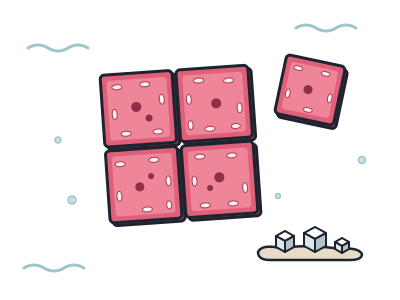
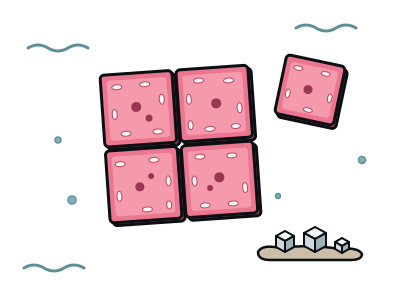
Tiny flat squares, like postage stamps, that thrive in brine salty enough to kill most life.
You and the square archaeon meet in the Archaea branch, shown at about 3.3 billion years ago (on 20 March, in a calendar from life's shared ancestor to today).
Most living things could not survive in water this salty, yet this tiny microbe thrives in it. Its cells are flat squares, or nearly square, with sharp, straight edges, like tiny postage stamps. When a cell divides, the two halves often stay stuck together. This makes flat sheets that look like an uncut sheet of stamps.
It lives in brine at least five times saltier than seawater. It can even survive where the water is so salty that no more salt will dissolve. In the last ponds of salt works, where seawater dries out until salt crystals form, it is often the most common microbe of all.
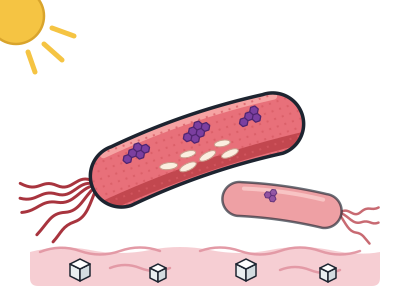
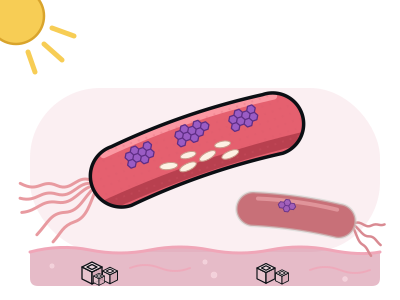
People often call it a 'square bacterium', but it is not a bacterium. It is an archaeon, from a separate great branch of life. It belongs to the salt-loving archaea, the same group as the pink salt archaeon shown beside it. Both carry pumps that run on light. Along with other salt-loving microbes, they help turn salt ponds pink or red.
Each square is only about 2 to 5 micrometres wide, and it is much thinner than it is wide, like a wafer. Tiny gas bubbles inside are thought to help it float up towards the light instead of sinking.
Named after its finder
It is named after Anthony Walsby, the British scientist who first spotted the square cells in 1980.
A very slow grower
For about 24 years nobody could grow it in a lab. It doubles its numbers only every 1 to 2 days, while a common lab bacterium can do it in about 20 minutes.
A record-breaking protein
When it was discovered, one of its proteins was the largest known from any archaeon, more than 9,000 building blocks long. The protein is a bit like the ones in animal mucus and may help protect the cell from drying out.