A species
Goliath frog
Conraua goliath
A cat-sized frog with nursery ponds
You and the goliath frog meet in the Four-limbed animals branch, shown at about 350 million years ago (on 1 December, in a calendar from life's shared ancestor to today).
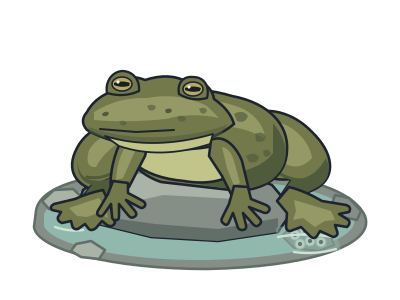
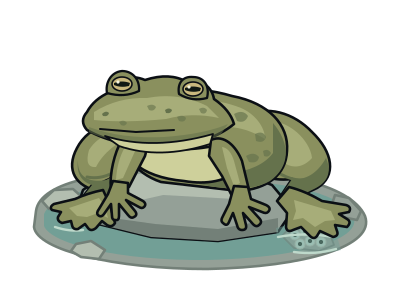
The world's largest living frog is also a nursery-pond builder. The biggest adults can weigh about 3.3 kg—as heavy as a small house cat. Despite its size, it belongs on the same frog-and-toad branch of the tree as the red-eyed tree frog and the cane toad.
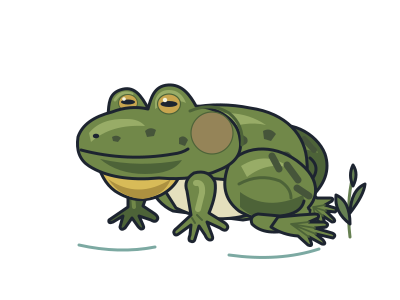
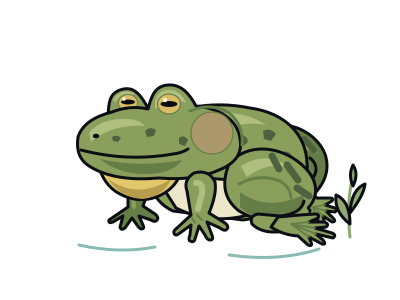
Its home is beside fast-flowing rivers and waterfalls in the tropical rainforests of southwestern Cameroon and mainland Equatorial Guinea. It has a broad, flattened body. Greenish-brown skin helps it blend into wet, moss-covered rocks. Long back legs fold beside its body when it rests.
Researchers found three kinds of nursery pool. Their shapes and displaced material suggested that frogs had cleaned rock pools, enlarged existing pools and dug new pools in gravel banks. The studied pools averaged about a metre across, with their deepest points averaging about 9 cm. Some were reused and held up to three groups of differently sized tadpoles. These nurseries are not completely safe: floods can wash eggs away, and pools can dry out.
Small beginnings
Despite their enormous adults, goliath frogs have tadpoles about the size of those of ordinary frogs.
After dark
Adults come out at night to search for food around river rocks.
Underwater attachments
Their eggs attach underwater to stones, gravel, branches and leaves.