A species
American bullfrog
Lithobates catesbeianus
A booming pond voice and a mighty appetite.
You and the american bullfrog meet in the Four-limbed animals branch, shown at about 350 million years ago (on 1 December, in a calendar from life's shared ancestor to today).
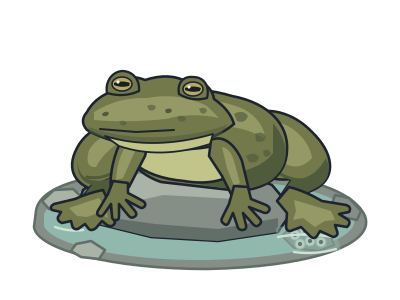
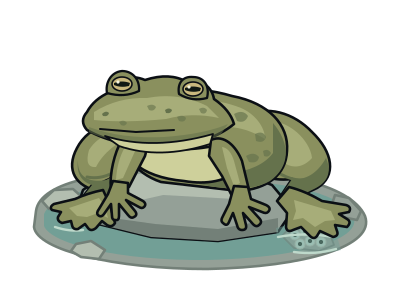
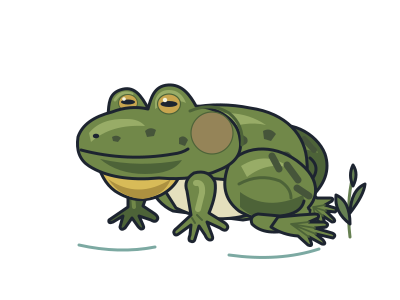
A deep ‘jug-o-rum’ booms across the pond: a male American bullfrog is calling. In spring and summer, males use this sound to attract mates and claim territory. Adults wait for prey, then catch animals they can swallow. Their menu includes insects, crayfish, fish and other frogs—even smaller bullfrogs. ‘Almost anything’ means suitable animal prey, not every object in reach.
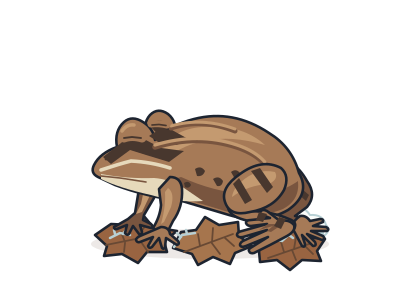
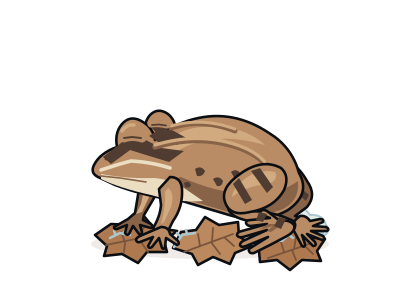
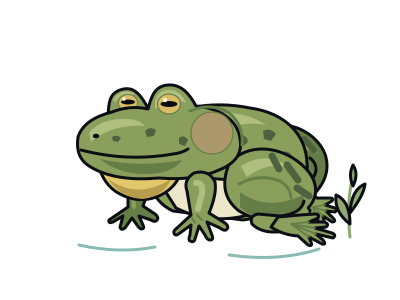
This hefty hunter belongs to the same frog family as the wood frog shown nearby on the tree. It has a wide head, a stout body and long back legs. Its smooth skin can be green or brown, sometimes with dark spots or patches. Not every green frog beside a pond is a bullfrog.
Bullfrogs are native to eastern and central North America, from southern Canada south to Florida. Their young begin life as swimming tadpoles. In warm southern areas, they may become frogs within a few months. In colder northern areas, that change can take two or three years.
Eggs in a floating sheet
Females lay thousands of eggs in a jelly-like sheet at the water’s surface. A large sheet can hold about 20,000 eggs.
A clue behind the eye
The round eardrum behind each eye is larger than the eye in adult males. In females, it is about eye-sized or smaller.
More than lungs
Bullfrogs breathe with lungs and can also absorb oxygen through their moist skin.