A species
Cosmopolitan flyingfish
Exocoetus volitans
A fish with fins that work like wings
You and the cosmopolitan flyingfish meet in the Bony fish and their descendants branch, shown at about 430 million years ago (on 24 November, in a calendar from life's shared ancestor to today).
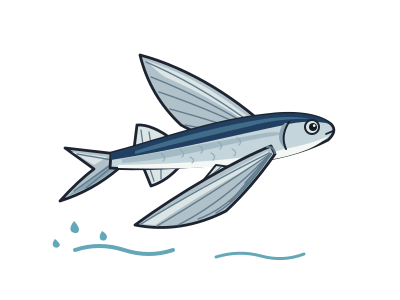
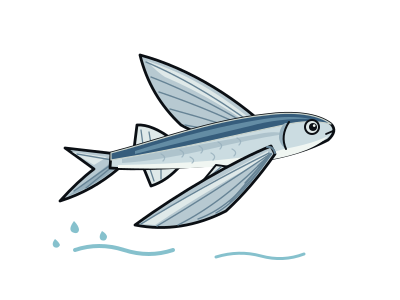
Bursting from the sea, this fish spreads its wing-like side fins and glides above the surface to escape larger fish. It does not flap like a bird. Like the clownfish and zebra mbuna shown nearby on the tree, it belongs to the ray-finned fishes. Its remarkable wings are still fish fins.
Only its two side fins form large gliding surfaces; the pair underneath its belly stay short. When swimming, it folds those long side fins against its body. Leaving the water can help it escape hunters such as tuna and swordfish, but the air brings another danger: seabirds hunt flying fishes too.
This species lives in warm waters across the Atlantic, Indian and Pacific oceans. It usually stays near the surface offshore, where it feeds mostly on tiny drifting animals. Its small mouth has no teeth.
Travelling together
Adults gather in groups called schools.
Floating beginnings
Females release eggs in batches. The eggs float and drift in open water.
Changing patterns
Young fish can have dark upright bars on a pale body. Adults have a dark blue to almost black back and a silvery white underside.
Next to it on the tree
- GuppyGives birth to live young; Trinidad stream guppies became a classic window on evolution in action.
- Turquoise killifishLives only a few months in temporary pools; its eggs wait out the dry season in mud.
- Four-eyed fishEach eye is split in two, so it sees above and below the water at the same time.
- Japanese medakaA rice-paddy fish that became the first backboned animal to mate in space, in 1994.