A species
Common field grasshopper
Chorthippus brunneus
The summer chirper of dry grassland, singing with a comb on its back legs.
You and the common field grasshopper meet in the Two-sided animals branch, shown at about 580 million years ago (on 11 November, in a calendar from life's shared ancestor to today).
Two-sided animalsStarfish, sea squirts and usChordatesVertebratesJawed vertebratesBony fish and their descendantsLobe-finned fishFish on the way to landFour-limbed animalsAmniotesMammals and their ancestorsMammalsLive-bearing mammalsPlacental mammalsPrimates, rodents and rabbitsPrimatesApesGreat apesHumans and chimpanzeesHumanMouth-first animalsMoulting animalsArthropods and kinArthropodsCrustaceans and insectsInsectsWinged insectsGrasshoppers, cockroaches and kinGrasshoppers and cricketsGrasshoppersCommon field grasshopper
The summer chirper of dry grassland, singing with a comb on its back legs.
The full page for Common field grasshopper is still being written and drawn.
Next to it on the tree
- Desert locustA shy grasshopper that, when crowded, changes colour and forms swarms of billions.
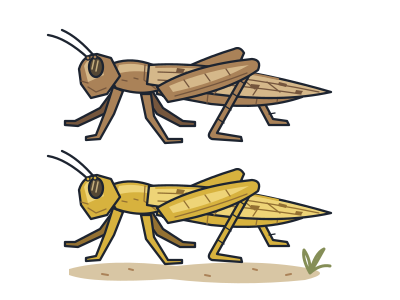
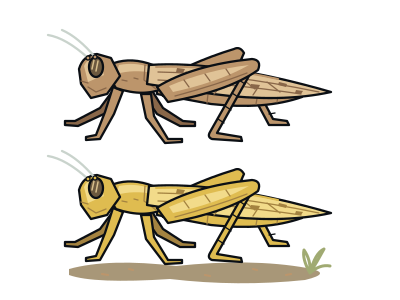
- Eastern lubber grasshopperA big, slow, brightly coloured grasshopper that hisses and froths when grabbed.
- Rainbow grasshopperA painted-looking prairie grasshopper whose bold colours warn birds off.
- Rocky Mountain locustOnce formed the largest swarm ever recorded, then vanished completely by about 1902.