A species
American cockroach
Periplaneta americana
A speedy sprinter that can keep going for a week or more without its head
You and the american cockroach meet in the Two-sided animals branch, shown at about 580 million years ago (on 11 November, in a calendar from life's shared ancestor to today).
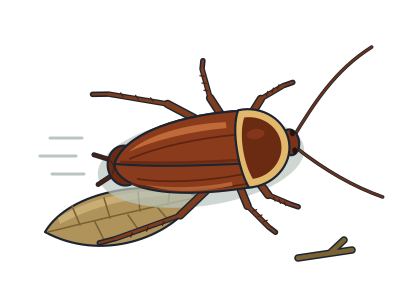
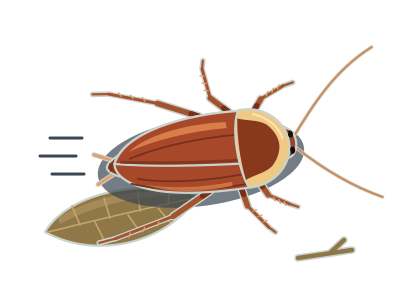
For its size, the American cockroach is one of the speediest runners among insects. In lab trials it ran at about 1.5 metres a second. That is about 50 of its own body lengths every second, which helps make it so hard to catch.
It has an even stranger talent. A carefully beheaded cockroach can live for a week or more. It breathes through tiny holes along its body, not through its mouth. Its blood is not under high pressure, so the wound seals up. Clusters of nerves in each part of its body keep simple reflexes working without the brain. In the end it dies of thirst, hunger or infection.
Its family is surprising too. Termites, which live in big, busy colonies, turn out to be cockroaches that became social. Scientists now officially class them inside the cockroach group. Mantises are close relatives of this whole group.
Despite its name, this cockroach probably came from Africa. Trading ships carried it around the world. At about 4 centimetres long, about the length of a small car key, it is the biggest of the common household cockroaches.
Thousands of lenses
Each of its two big eyes has more than 3,500 tiny lenses. Together they make a mosaic-like picture that works well in dim light but is not very sharp.
Eggs in a purse
A female lays about 16 eggs inside a hard case about 8 millimetres long. The case is shaped like a purse and turns from brown to black within a day or two. She makes about one case a month for around ten months.
A head that keeps going
A cut-off cockroach head can keep waving its antennae for hours. And a healthy cockroach can go for weeks on a single meal.
Next to it on the tree
- German cockroachA small kitchen cockroach that now lives only alongside people.
- Madagascar hissing cockroachHisses by pushing air out of its breathing holes; a gentle classroom pet.
- Giant burrowing cockroachThe heaviest cockroach, a wingless Australian digger that raises its young in a burrow.
- Brown-hooded cockroachLives in family groups in rotten logs and digests wood just as termites do.
- TermitesSocial cockroaches with kings and queens; some colonies have millions of workers.