A species
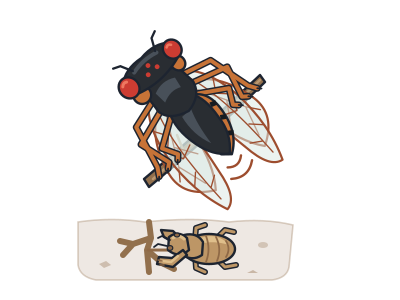
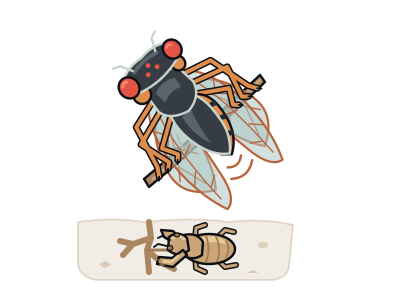
Periodical cicada
Magicicada septendecim
Seventeen years underground, then a brief, noisy reunion.
You and the periodical cicada meet in the Two-sided animals branch, shown at about 580 million years ago (on 11 November, in a calendar from life's shared ancestor to today).
After about 17 years underground, this cicada joins a huge, noisy gathering of periodical cicadas. It has not been asleep: the young feed on fluids from plant roots and slowly grow. Some of its close relatives emerge after just 13 years. Sharing a timetable does not necessarily mean sharing the closest family connection.
When emergence time arrives, the young climb nearby plants and shed their outer skins to become winged adults. Empty brown skins stay clinging to trunks and leaves. In one place, most may appear over only a few nights. Such enormous gatherings help overwhelm predators: birds and other animals eat their fill, while many cicadas survive to reproduce.
Despite their summer reputation, these gatherings begin in spring, from late April to early June depending on the location. Each adult lives only a few weeks. The whole local event usually lasts about four to six weeks—a short burst of calling and mating after years beneath the trees.
Adults drink too
Adults suck fluids from trees rather than chewing leaves.
Not always red-eyed
Red eyes are usual among periodical cicadas, but rare individuals naturally have white or blue eyes.
Some miss the date
Some individuals emerge before or after their population's usual year.