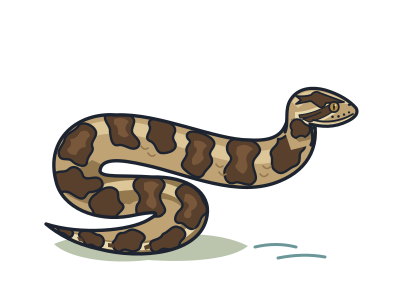
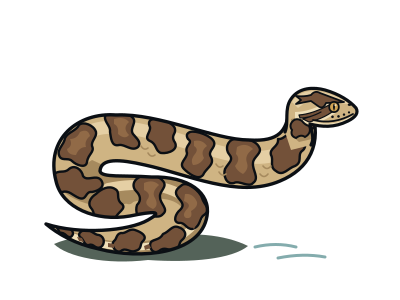
A species
Burmese python
Python bivittatus
A gut that grows for a giant dinner
You and the burmese python meet in the Amniotes branch, shown at about 320 million years ago (on 4 December, in a calendar from life's shared ancestor to today).
A Burmese python's gut grows rapidly after a meal, helping it tackle an enormous dinner. Its small intestine can roughly double in mass, and activity there usually peaks about two or three days after feeding. Its heart works harder too, helping meet the demands of digestion.
How enormous can dinner be? Researchers watched a snake about 4.6 metres long swallow a deer weighing about 35 kilograms—roughly two-thirds of the snake's own weight. It does not dislocate its jaws. The two halves of its lower jaw are linked at the front by flexible tissue rather than fused bone. Flexible connections and stretchy skin let large prey pass through.
This snake belongs to the python family, and the Indian python is a close relative. Rather than constantly chasing food, Burmese pythons wait for prey. Weeks or months can pass between meals. Once digestion finishes, the gut shrinks and becomes less active again, saving energy until the next meal.
No venom needed
Burmese pythons subdue prey by wrapping muscular coils around it, rather than using venom.
A tongue that follows smells
The flicking, forked tongue collects scent information and helps the snake work out which direction a smell comes from.
Young climbers
Young snakes spend time in trees and on the ground. Older, heavier snakes mostly stay on the ground.