A species
Blue-tongued skink
Tiliqua scincoides
A startling flash of blue
You and the blue-tongued skink meet in the Amniotes branch, shown at about 320 million years ago (on 4 December, in a calendar from life's shared ancestor to today).
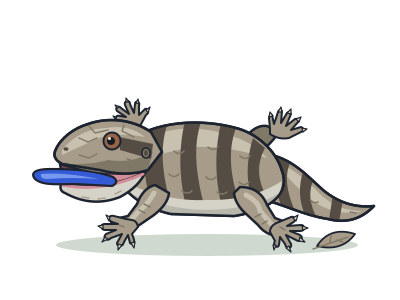
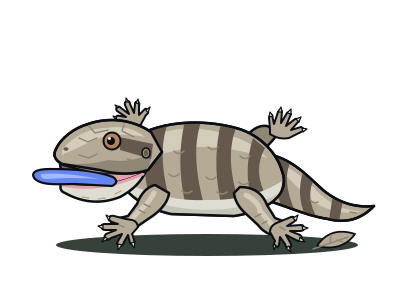
A bright blue tongue is this lizard’s surprise defence. When threatened, it opens its pink mouth and flashes its broad tongue. The sudden contrast may startle a predator. It may also hiss and flatten its body, making itself look bigger. The display is not a guaranteed escape.
This is a skink, not a gecko. Skinks, geckos, iguanas, monitors and snakes sit on different branches of the wider lizard-and-snake family tree. Unlike its snake relatives, it has four short legs, each with five toes. The eastern form has smooth grey-to-brown scales crossed by dark bands.
It lives on the ground, in places including woodland, grassland and suburban gardens with nearby shelter. Its meals include both plants and animals: fruit, flowers, leaves, insects and snails. Strong jaws and teeth can crush snail shells and beetles. At night, it shelters beneath logs, fallen leaves or other ground cover.
A replacement tail
If seized, it can shed its tail. A replacement grows back, but is shorter.
An independent start
The young can look after themselves immediately and spread out within days.
A long life
Some individuals in human care have lived for 20 years.
Next to it on the tree
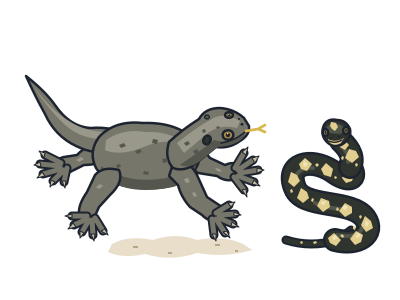
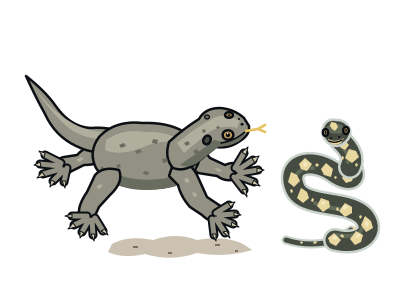
- Iguanas, monitors and snakesChameleons, Komodo dragons and snakes turn out to be one family branch.
- GeckosNight-loving lizards that chirp, lick their own eyes clean, and many walk up walls.
- SandfishA smooth desert skink that dives into sand and wriggles through it as if swimming.
- Wall lizards, tegus and worm lizardsWall lizards, big tegus and legless worm lizards are one family branch, despite looking nothing alike.