A species
Zebrafish
Danio rerio
A striped minnow with a remarkable repair kit.
You and the zebrafish meet in the Bony fish and their descendants branch, shown at about 430 million years ago (on 24 November, in a calendar from life's shared ancestor to today).
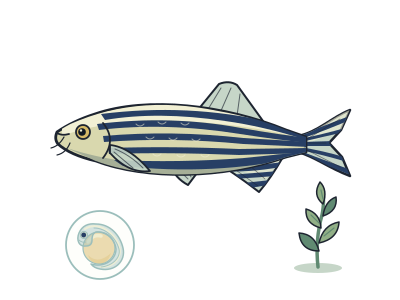
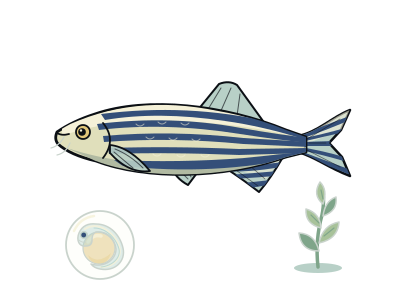
This striped minnow is a laboratory star: its embryos are almost see-through, and adults can regrow damaged heart muscle. It is a relative of carp and goldfish, with a typical adult about as long as a small paperclip. Unlike the embryos, ordinary adults are not transparent.
An adult repairs its existing heart rather than growing a whole new one. Surviving heart muscle cells divide and help replace damaged muscle. Researchers study this ability to understand heart repair, but it does not mean the fish can recover from every possible heart injury.
The nearly transparent embryos offer another window into living bodies. Scientists can watch internal organs developing inside them. Beyond the laboratory, zebrafish live in fresh water in South Asia, including streams, ponds, ditches and canals. Slow or standing water around rice fields can also be home.
Stripes with a twist
Unlike a zebra’s stripes, its dark stripes run lengthways towards the tail.
Four tiny feelers
Adults have two pairs of fine, whisker-like feelers around the mouth.
Relatives with extra instructions
After branching away from the zebrafish line, the goldfish-and-carp branch gained an extra copy of its whole set of genetic instructions.
Next to it on the tree
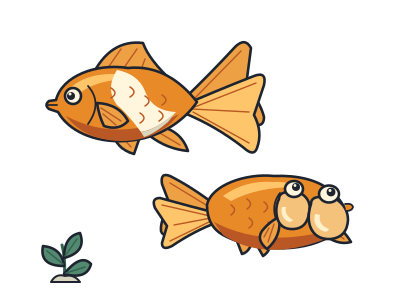
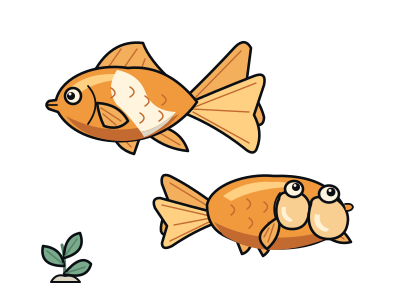
- GoldfishA carp bred in China for over a thousand years into bubble-eyed and fan-tailed forms.
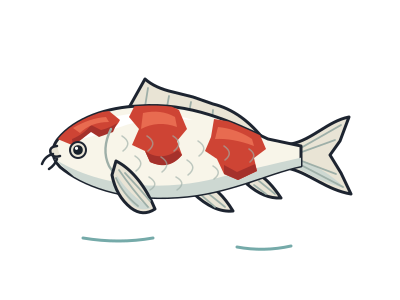
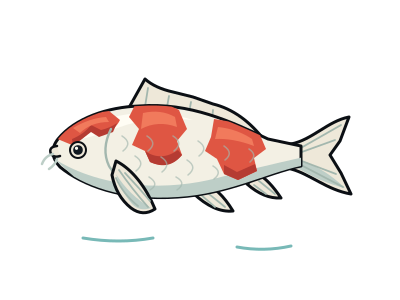
- KoiColourful carp bred in Japan from rice-paddy fish; prize koi can sell for millions.
- Grass carpEats its own weight in water plants each day, so it is used to clear weedy canals.
- Clown loachAn orange-and-black aquarium favourite that clicks and sometimes naps on its side as if dead.