A species
Koi
Cyprinus rubrofuscus
Carp from rice-farm reservoirs became colourful pond champions.
You and the koi meet in the Bony fish and their descendants branch, shown at about 430 million years ago (on 24 November, in a calendar from life's shared ancestor to today).
Koi began as food carp in reservoirs that supplied Japan’s terraced rice fields. Around Ojiya and Nagaoka, farmers bred fish with unusual colours and patterns. That local tradition produced pond fish prized far beyond Japan. In 2018, one exceptional champion sold for about 200 million yen—about US$1.8 million at the time. Such enormous prices are not the usual cost of a pond fish.
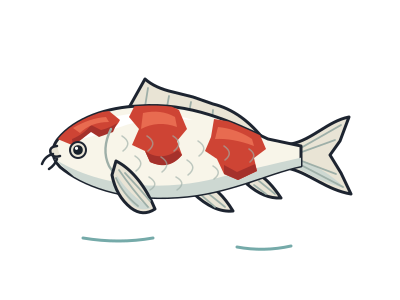
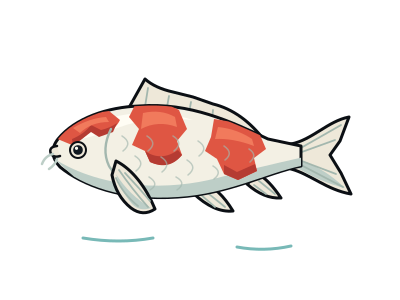
Despite their familiar pond setting, koi are not giant goldfish. The two are related but belong to different species. Look closely at a koi’s mouth: four short, whisker-like feelers help it find food near the bottom, even in cloudy water. Goldfish have no such feelers.
Kohaku koi have a white body with red markings. That champion wore this pattern, but koi are not all red and white. Showa koi have a black base with red and white markings. These different patterns belong to ornamental carp, rather than separate species.
A crowded colour chart
Breeders have developed more than 100 named koi varieties.
Winter slowdown
When the water cools in winter, koi’s bodies slow down and they need much less food.
Flowing fins are special
Butterfly koi have unusually long, flowing fins. Standard koi have shorter fins.
Next to it on the tree
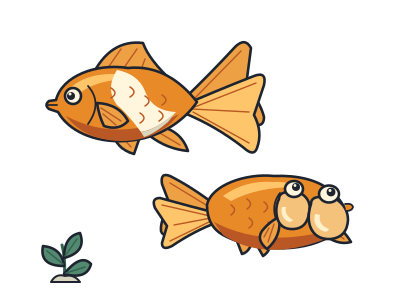
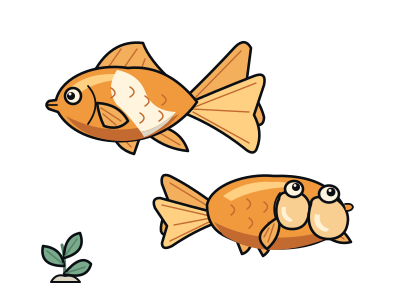
- GoldfishA carp bred in China for over a thousand years into bubble-eyed and fan-tailed forms.
- ZebrafishA striped minnow with see-through embryos that can regrow its heart: a lab star.
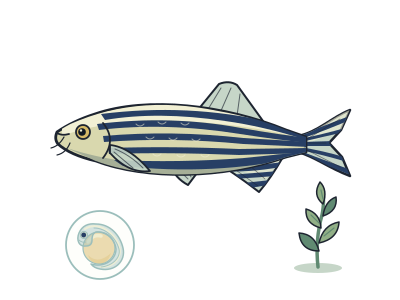
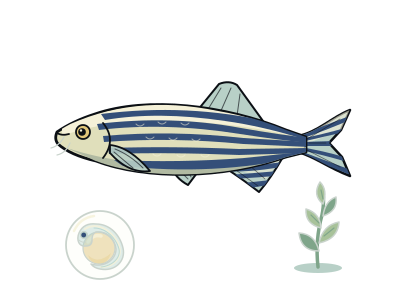
- Grass carpEats its own weight in water plants each day, so it is used to clear weedy canals.
- Clown loachAn orange-and-black aquarium favourite that clicks and sometimes naps on its side as if dead.