A species
Atlantic bluefin tuna
Thunnus thynnus
A warm-bodied ocean traveller that can outweigh a grand piano.
You and the atlantic bluefin tuna meet in the Bony fish and their descendants branch, shown at about 430 million years ago (on 24 November, in a calendar from life's shared ancestor to today).
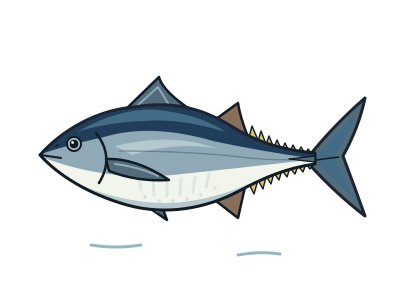
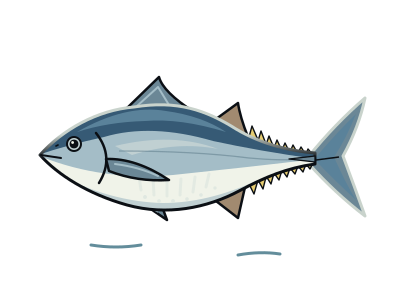
A warm-bodied torpedo that can grow heavier than a grand piano might sound like a shark. But Atlantic bluefin tuna belong to the mackerel family: they are bony fish, not sharks. Their thick bodies narrow towards a crescent-shaped tail, and their journeys can take them thousands of kilometres across the Atlantic.
Unlike most fish, they keep their swimming muscles warmer than the surrounding water. Closely packed blood vessels pass heat from warm blood leaving the muscles to cooler blood returning from the gills. This saves warmth made by swimming; it does not mean every part of the fish stays at one temperature.
These travellers keep swimming to move oxygen-bearing water over their gills. Adults mainly hunt smaller fish, including herring and mackerel—even members of their own wider family can be food. Yet these powerful hunters are also prey: sharks and killer whales eat bluefin.
Deep divers
They also venture far below the surface, with dives reaching about 500–1,000 metres.
Millions of eggs
A female can produce up to about 10 million eggs in a year.
Fins that tuck away
The first back fin and paired belly fins tuck into hollows in the body, making it more streamlined.