A species
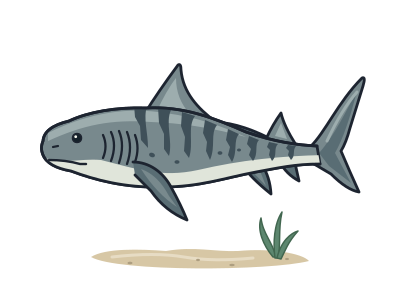
Tiger shark
Galeocerdo cuvier
A striped ocean wanderer with an extraordinary menu.
You and the tiger shark meet in the Jawed vertebrates branch, shown at about 465 million years ago (on 21 November, in a calendar from life's shared ancestor to today).
This striped ocean wanderer eats sea turtles—and sometimes swallows licence plates. Its broad menu also includes fish, rays, squid, seabirds and other sharks. It scavenges dead animals too. Powerful jaws and saw-edged teeth can cut through turtle shells. Licence plates and old tyres found in tiger sharks’ stomachs are swallowed rubbish, not useful food.
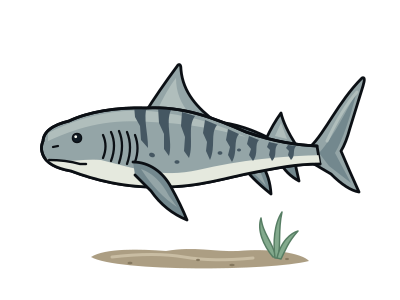
The tiger name comes from its dark markings, not an orange coat. Small youngsters have a net-like pattern that becomes vertical bars. These fade as the shark grows, so a large adult may have barely visible stripes. Its broad, blunt head also sets it apart from the pointed shark shape many people picture.
Tiger sharks range through warm parts of the Atlantic, Indian and Pacific oceans. They use river mouths, harbours, lagoons and waters around ocean islands. Some travel into cooler waters in warmer months, then return towards the tropics in winter. Like their hammerhead relatives, they give birth to live young rather than laying eggs.
Night-time hunters
Tiger sharks often hunt alone and feed at night, though several may gather where food is available.
Big babies
Newborn pups are about 50–75 centimetres long.
Decades at sea
Tiger sharks can live for more than 30 years.
Next to it on the tree
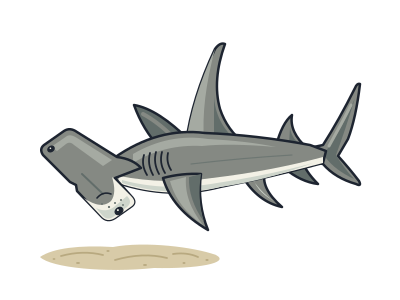
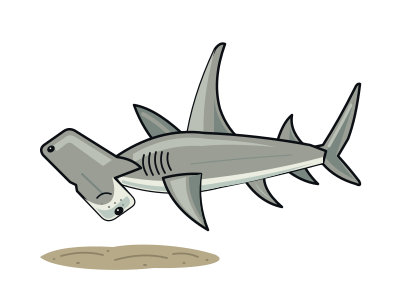
- Great hammerheadIts hammer-shaped head is a wide sensor bar for finding stingrays hidden in sand.
- Bull sharkA sea shark that swims thousands of kilometres up rivers like the Amazon and Mississippi.
- Blue sharkA slender, indigo ocean wanderer that rides currents right around the Atlantic.
- Blacktip reef sharkPatrols shallow coral lagoons with its black-tipped fin often poking above the surface.
- Small-spotted catsharkIts empty egg cases wash up on beaches as the leathery "mermaid's purses".