A species
Southern stingray
Hypanus americanus
Hidden in sand, with a tail built for defence
You and the southern stingray meet in the Jawed vertebrates branch, shown at about 465 million years ago (on 21 November, in a calendar from life's shared ancestor to today).
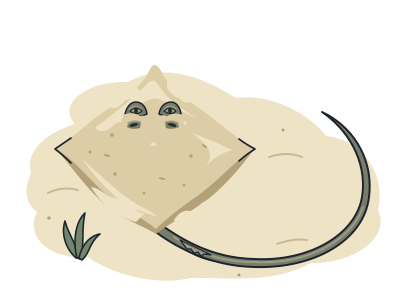
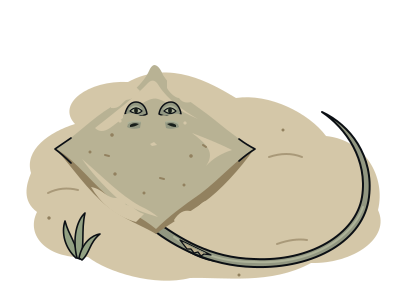
A southern stingray can disappear beneath the sand, leaving just its eyes and breathing openings showing. Its flattened body stays hidden below. The barbed spine near the base of its tail is for defence, not for spearing meals. It is not normally aggressive, but accidentally stepping on a hidden ray can trigger a defensive sting.
This sandy seabed dweller is a fish related to sharks. Manta rays, sawfish and electric rays also belong to the wider ray group. Their different shapes can hide that connection: a sawfish is a ray too. And being a ray does not automatically mean having a sting.
The southern stingray finds meals on or beneath the seabed, including clams, marine worms, shrimps, crabs and small fish. It uncovers food by stirring sand with its fins and squirting water from its mouth. Shallow bays, sandy flats and seagrass beds provide places for it to search.
Born swimming
Females give birth to live young rather than laying egg cases on the seabed.
A fish-powered clean
It visits cleaning stations where small fish eat parasites from its body.
Not always alone
Southern stingrays can be found alone, in pairs or sometimes in groups.
Next to it on the tree
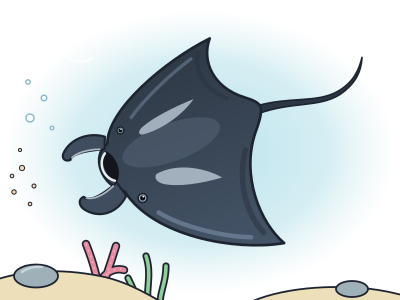
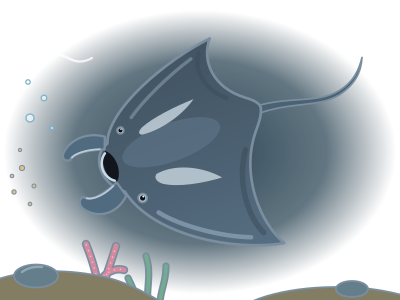
- Reef manta rayA gentle giant with the largest brain-to-body ratio of any fish, and it may recognise itself.
- Spotted eagle rayFlies through the water on spotted wings and sometimes leaps right out of the sea.
- Giant freshwater stingrayA river ray wider than a door; one caught in the Mekong in 2022 weighed about 300 kg.