A species
Sea pig
Scotoplanes globosa
A sea cucumber that waddles in feeding herds
You and the sea pig meet in the Starfish, sea squirts and us branch, shown at about 560 million years ago (on 13 November, in a calendar from life's shared ancestor to today).
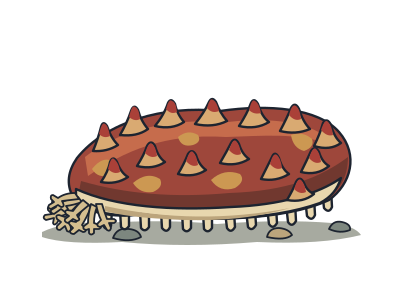
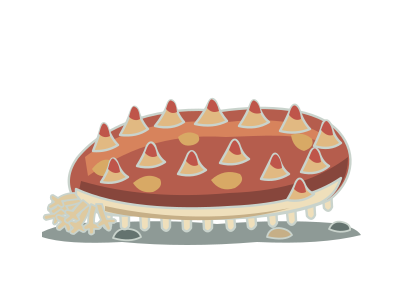
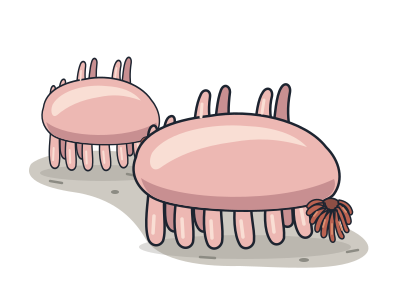
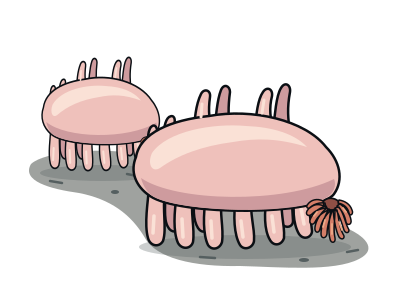
A sea pig waddles across deep-sea mud on puffy, leg-like feet, sometimes in gatherings called herds. Despite its name, it is a sea cucumber, not a mammal. It belongs to the same broad animal group as starfish and sea urchins. Unlike a sea urchin’s rigid skeleton, its skeleton is made of tiny separate pieces inside its soft body.
Its unusually long tube feet lift its body above the seabed and help stop it sinking into the mud. This is a soft-bottomed world where food arrives from above: remains of algae and animals sink from shallower water. The sea pig feeds on these remains in the mud rather than hunting large prey.
Feeding groups often contain about 10 to 30 animals, although gatherings of more than 600 have been reported. These are feeding gatherings, so calling them herds does not mean they behave like grazing mammals.
Ten food collectors
Ten mucus-coated tentacles surround its mouth and help gather food.
Rolled by the current
Strong currents can roll sea pigs along the seabed.
A Challenger discovery
The species was first described from animals collected during the nineteenth-century voyage of HMS Challenger.