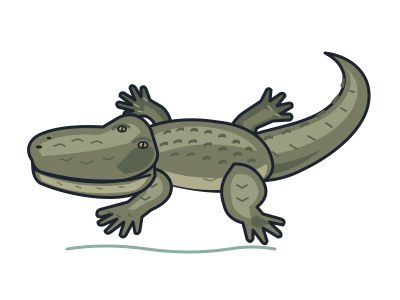
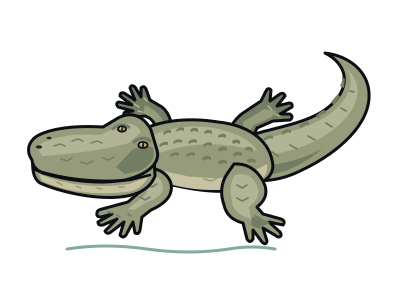
An extinct species
Purussaurus †
Purussaurus brasiliensis
An alligator relative with a giant bite
Lived about 11.63–5.333 million years ago.
You and the purussaurus meet in the Amniotes branch, shown at about 320 million years ago (on 4 December, in a calendar from life's shared ancestor to today).
This giant caiman belonged on the alligator side of the crocodilian family. It was closer to the American alligator than to the Nile or saltwater crocodiles—not simply a giant version of either. Its heavy jaws suggested an exceptionally powerful bite, although that strength was calculated rather than measured.
It lived in Amazonian wetlands during the Late Miocene, a geological interval about 12 to 5 million years ago. Rivers, swamps and lakes formed its watery surroundings. Fossils of this species came from riverbanks in southwestern Amazonia, including along the Purus, Acre and Juruá rivers. Researchers inferred that its size and jaws made it a top predator capable of taking large animals.
The clearest clues came from its bones. Fossils included skulls, lower jaws, teeth, bones from the neck and back, and bony skin plates. One well-preserved skull measured about 1.4 metres long. These remains revealed a formidable head, but reconstructing the whole animal required comparisons with living relatives.
An enormous nasal opening
The bony opening for its nostrils occupied almost half the snout’s length.
Different teeth for different positions
Its front teeth were tall and pointed, while those farther back were rounder and blunter.
Named from a jaw
João Barbosa Rodrigues named the species in 1892 from part of a lower jaw. That original fossil was later lost.
Next to it on the tree
- American alligatorIts nest's temperature decides whether the eggs hatch as males or females.
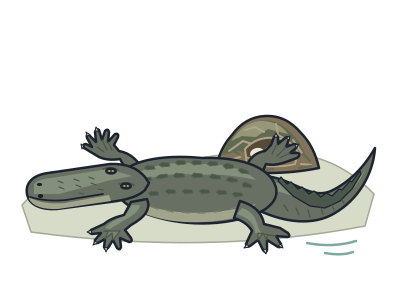
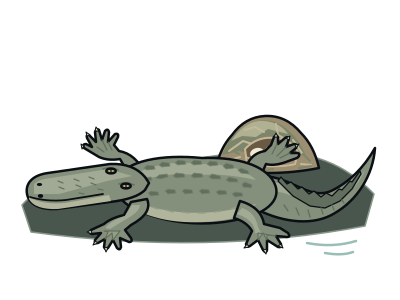
- Chinese alligatorA small, rare alligator of the Yangtze that spends much of the year in burrows.
- Spectacled caimanA bony ridge between its eyes looks like a pair of glasses.
- Black caimanThe Amazon's biggest predator, a dark giant that can top five metres.