A species
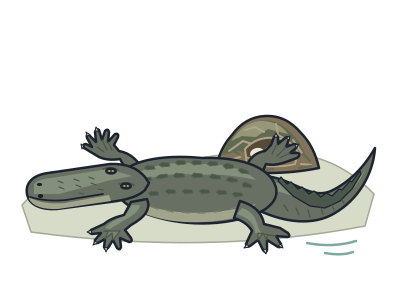
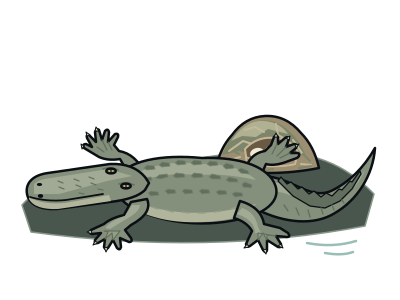
American alligator
Alligator mississippiensis
A nest’s warmth shapes the next generation.
You and the american alligator meet in the Amniotes branch, shown at about 320 million years ago (on 4 December, in a calendar from life's shared ancestor to today).
An American alligator’s nest temperature decides whether its eggs develop into males or females. Cooler conditions favour females, middle temperatures favour males, and very hot conditions favour females again. So “hotter means male” is not the whole story. Temperature matters especially during a sensitive stretch of about two weeks while the young develop inside their eggs.
This alligator belongs to the same wider family as crocodiles, birds and dinosaurs. It sits on the crocodilian branch, rather than among the dinosaurs themselves. That makes it a dinosaur relative, not a living dinosaur.
Care continues when the eggs are ready to hatch. The young call from inside their shells, prompting their mother to uncover the nest. She then gently carries hatchlings to water in her mouth. The young gather near her and commonly stay for about a year, sometimes for two or three.
A shelter for neighbours
Alligators dig and maintain pools called alligator holes. These can hold water and shelter other wildlife during dry periods, though severe drought can dry them out.
Shared nesting space
Some turtles, including Florida red-bellied turtles, lay their eggs in active or abandoned alligator nests.
Replacement teeth
An American alligator has about 74–80 teeth at once and replaces worn teeth throughout its life.
Next to it on the tree
- PurussaurusA giant caiman from ancient Amazon wetlands with a powerful bite estimated from its fossils.
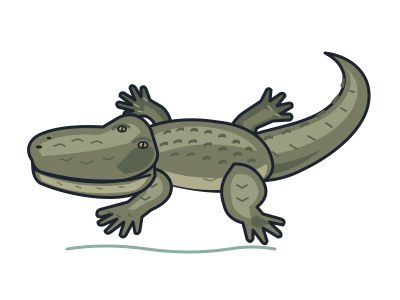
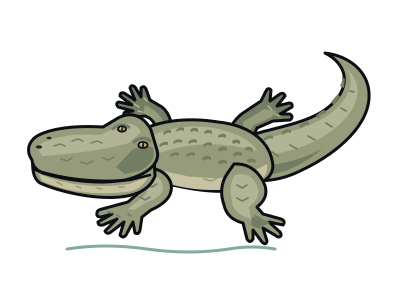
- Chinese alligatorA small, rare alligator of the Yangtze that spends much of the year in burrows.
- Spectacled caimanA bony ridge between its eyes looks like a pair of glasses.
- Black caimanThe Amazon's biggest predator, a dark giant that can top five metres.