A species
Opah
Lampris guttatus
The fish that keeps itself warm by flapping its fins like wings
You and the opah meet in the Bony fish and their descendants branch, shown at about 430 million years ago (on 24 November, in a calendar from life's shared ancestor to today).
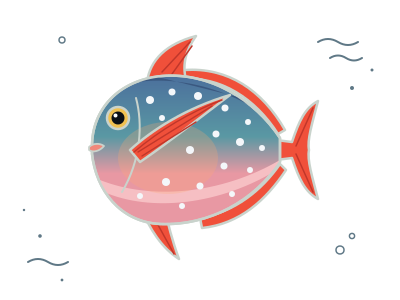
Most fish are as cold as the water around them. In 2015, scientists in the United States reported that the opah is different. It was the first fish found to be fully warm-blooded, warming its whole body, heart included. It makes the heat by flapping its big red side fins all the time, a bit like a bird flying underwater.
Keeping that heat is the clever part. In its gills, blood vessels carrying warm blood wind around vessels carrying cold blood, so the heat passes across before the sea can steal it. Layers of fat wrap around its gills, heart and working muscles. Its heart, gut, head and chest muscles were measured at about 3 to 6 °C warmer than the water. That is not as warm as a bird or a mammal, but it makes a big difference.
Tuna and some sharks warm only parts of their bodies. On long, deep dives their hearts cool and slow down. The opah's heart stays warm. Tagged opah spent most of their time about 50 to 400 metres down. They rarely came up to the surface, and their body heat held steady. Being warm helps them chase quick prey like squid.
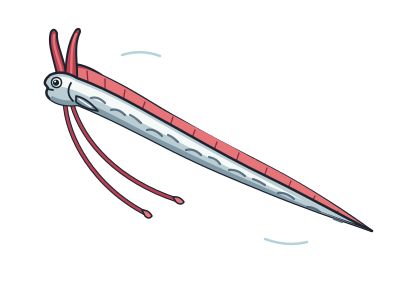
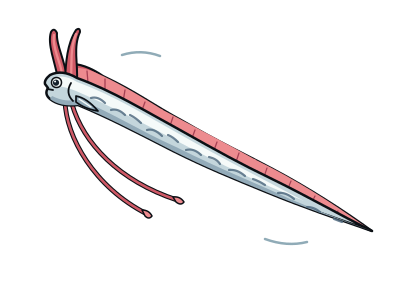
On the tree, the opah sits beside the giant oarfish, a long, ribbon-shaped fish. Both belong to the same group of fish, even though a round opah looks nothing like an oarfish.
Mighty fin muscles
The muscles that power its fins make up about 17% of the opah's body weight. Its fins may look delicate, but they make it a strong long-distance swimmer.
A long journey
One opah fitted with a satellite tag swam from central California to Hawaii in about eight months.
No spiny fins
All the opah's fins are held up by soft rays, with no sharp spines. Many of its more distant relatives among the spiny-rayed fish, such as perch, have sharp spines in their fins.