A species
Atlantic mudskipper
Periophthalmus barbarus
A goby that skips over mud and breathes through its skin.
You and the atlantic mudskipper meet in the Bony fish and their descendants branch, shown at about 430 million years ago (on 24 November, in a calendar from life's shared ancestor to today).
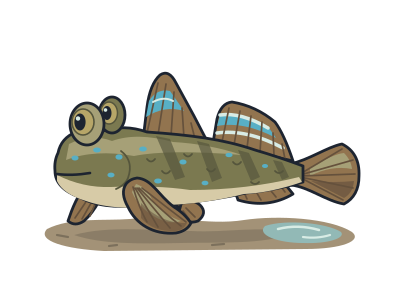
The Atlantic mudskipper is a goby that skips across mudflats on its fins, breathing through its skin out of water. Spending time on land does not make it a frog: it is still a fish. Its powerful side fins are fins, not little legs. They help it move over exposed mud and sand. Oxygen also passes through linings inside its body that are rich in blood vessels.
Its home is the tropical coast of western Africa, from Senegal to Angola, including islands in the Gulf of Guinea. It lives on tidal mudflats, around mangroves and in coastal lagoons. It is the only mudskipper native to this region; its mudskipper relatives live around the Indian and western Pacific oceans.
Raised, movable eyes help it look around above and below water. Adults mainly eat small animals from the mud surface, including crabs and insects.
Eggs below ground
It lays its eggs in burrows.
A different way to blink
It pulls its eyes down into its head while a thin covering slides over them. Blinking wets, cleans and protects its eyes, much as ours does.
A flash of blue
Its tall first back fin has a bright blue stripe.