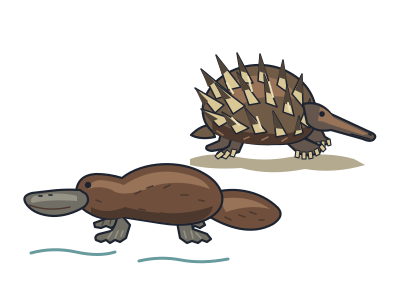
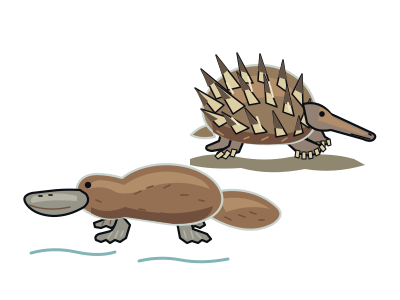
A group of living things
Egg-laying mammals
Monotremata
Eggs, fur and milk without nipples.
This branch is shown at about 55 million years ago; its age is a rough estimate.
You and egg-laying mammals meet in the Mammals branch, shown at about 180 million years ago (on 16 December, in a calendar from life's shared ancestor to today).
These mammals lay eggs and release milk through patches of belly skin instead of nipples. You might hear this called “sweating milk”, but milk is not sweat: special milk-making glands supply it. Platypuses and echidnas belong together on this branch. They are the sister group of live-bearing mammals, meaning these are the two neighbouring branches of the mammal family tree.
Eggs do not make them any less mammalian. Like other mammals, they have hair, make milk and are warm-blooded. Their eggs have soft shells. These are specialised modern animals, not unfinished mammals or a halfway stage between reptiles and mammals.
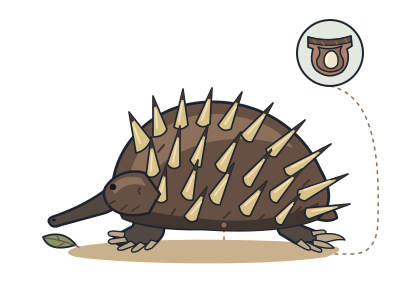
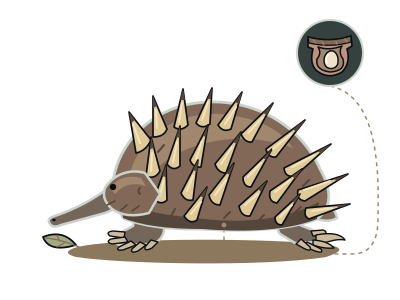
The short-beaked echidna shows how egg-laying and milk-feeding fit together. A mother lays one egg in a temporary belly pouch. After hatching, her young drinks milk there. Once it develops spines, she moves it into a nursery burrow and continues feeding it milk.
An electrical sense
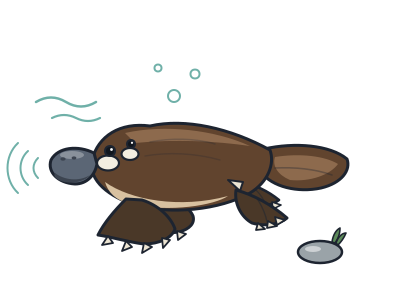
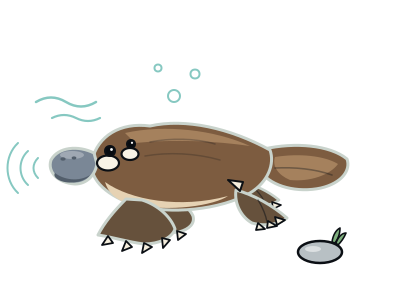
Platypuses and echidnas can detect weak electrical signals. Platypuses have many more of these sensors.
Not a bird’s beak
A platypus’s bill is leathery, not hard like a bird’s beak. It is sensitive to touch.
A sticky collecting tool
Short-beaked echidnas open ant and termite nests with their snouts and claws, then collect insects with a long, sticky tongue.
Inside egg-laying mammals
- PlatypusA mammal that lays eggs, senses electricity with its bill and glows under UV light.
- Short-beaked echidnaA spiny ant-eater that lays an egg and keeps it in a pouch.
- Western long-beaked echidnaA bigger, rarer echidna of New Guinea mountains that uses spines on its tongue to eat earthworms.
- ObdurodonAn ancient platypus that still had real teeth, which today’s platypus loses as a baby.
Next to it on the tree
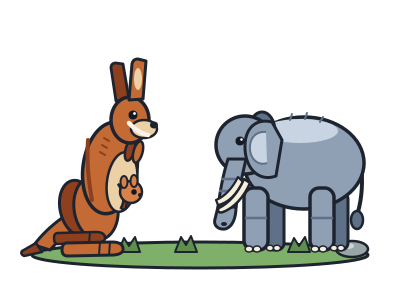
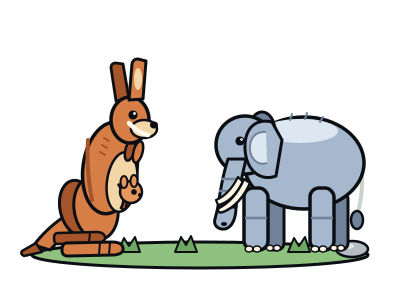
- Live-bearing mammalsMammals that give birth to live young: pouch-raisers and placentals.
- RepenomamusA badger-sized early mammal; a smaller species in its group had swallowed a young dinosaur.
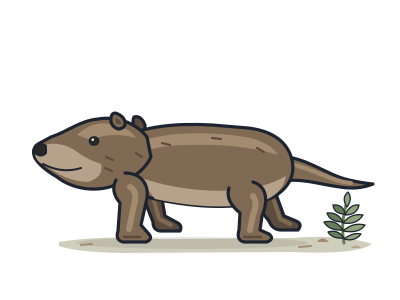
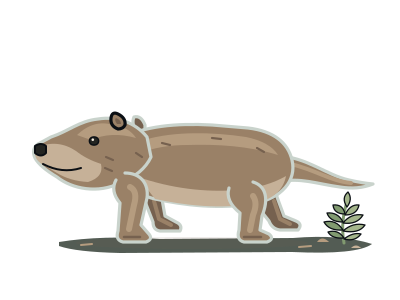
- TaeniolabisA beaver-sized gnawer from just after the dinosaurs, from a mammal group that lasted over 100 million years.