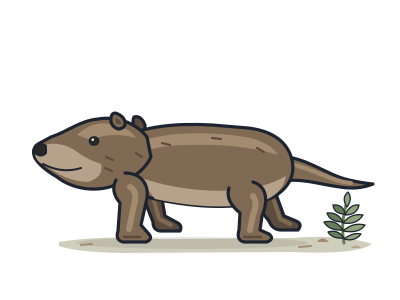
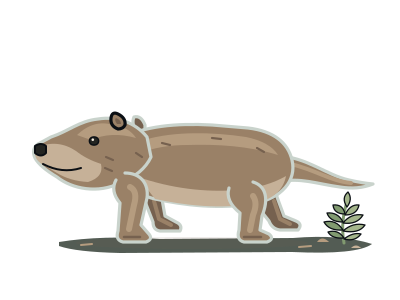
An extinct species
Repenomamus †
Repenomamus giganticus
A badger-sized mammal with a dinosaur-eating relative
Lived about 125–123 million years ago.
You and the repenomamus meet in the Mammals branch, shown at about 180 million years ago (on 16 December, in a calendar from life's shared ancestor to today).
This badger-sized early mammal had a smaller relative found with baby dinosaur bones in its stomach. The famous meal belonged to that smaller species, not this one. It lived roughly 125 million years ago. Its discovery challenged the idea that mammals living alongside dinosaurs were all tiny.
Its skeleton showed a long body and short, sturdy legs. A substantial head carried powerful jaws and strong, pointed front teeth. Researchers interpreted these features as signs of meat eating. That was evidence about its likely diet, not proof that this larger species ate dinosaurs.
It belonged to a now-extinct mammal family, not the badger family. Its resemblance to a badger was about body shape rather than close kinship. Researchers usually placed its family within the mammal tree, but its exact position remained debated.
A sizeable skull
Its skull measured about 16 centimetres long—roughly half as long again as its smaller relative’s.
Missing hands and feet
The original fossil preserved much of a connected skeleton, but its hands and feet were missing.
A small dinosaur meal
The baby dinosaur eaten by its smaller relative had an estimated head-and-body length of about 14 centimetres.
Next to it on the tree
- Live-bearing mammalsMammals that give birth to live young: pouch-raisers and placentals.
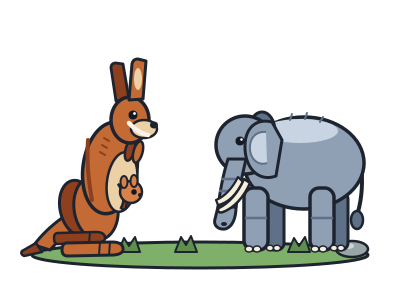
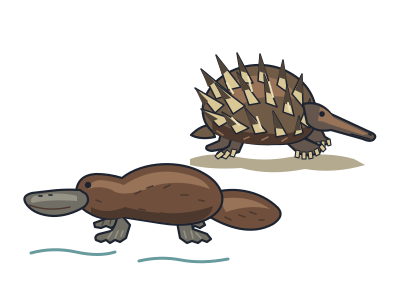
- Egg-laying mammalsEgg-laying mammals whose young drink milk released onto skin patches rather than through nipples.
- TaeniolabisA beaver-sized gnawer from just after the dinosaurs, from a mammal group that lasted over 100 million years.