A species
Short-beaked echidna
Tachyglossus aculeatus
An egg in a pouch, and milk for the hatchling.
You and the short-beaked echidna meet in the Mammals branch, shown at about 180 million years ago (on 16 December, in a calendar from life's shared ancestor to today).
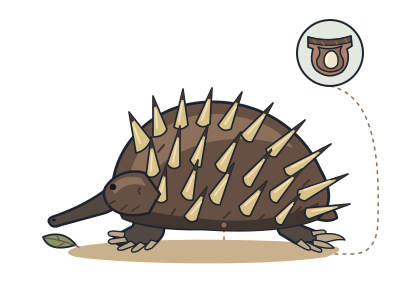
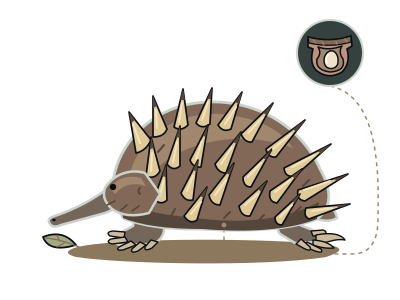
The short-beaked echidna is a spiny ant-eater that lays an egg and keeps it in a pouch on its belly. That surprising mix puts it alongside the platypus in the egg-laying mammal group, called monotremes. A pouch does not make it a marsupial. Like other mammals, an echidna mother makes milk, but she has no nipples. Instead, milk comes through tiny openings in her skin.
The egg hatches after about 10 days. The newborn is blind and hairless: a very different sight from its spiny mother. A baby echidna is commonly called a puggle. After leaving the pouch, it stays in a nursery burrow, where its mother returns to feed it.
For food, an adult breaks into ant and termite nests with its pointed snout and strong claws. Its long, sticky tongue collects the insects. Despite its ant-eater reputation, it also eats other small animals, including earthworms and beetle larvae.
No teeth needed
Adult echidnas have no teeth.
A capable swimmer
It swims well, holding its snout above the water.
An echidna train
Usually solitary, echidnas may form breeding-season ‘trains’, with several males following one female.
Next to it on the tree
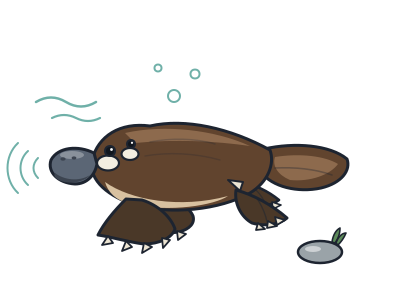
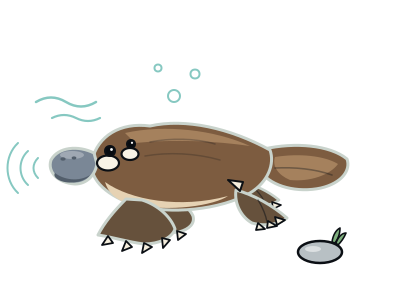
- PlatypusA mammal that lays eggs, senses electricity with its bill and glows under UV light.
- Western long-beaked echidnaA bigger, rarer echidna of New Guinea mountains that uses spines on its tongue to eat earthworms.
- ObdurodonAn ancient platypus that still had real teeth, which today’s platypus loses as a baby.