A species
Green drake mayfly
Ephemera danica
Years underwater, just days in the air
You and the green drake mayfly meet in the Two-sided animals branch, shown at about 580 million years ago (on 11 November, in a calendar from life's shared ancestor to today).
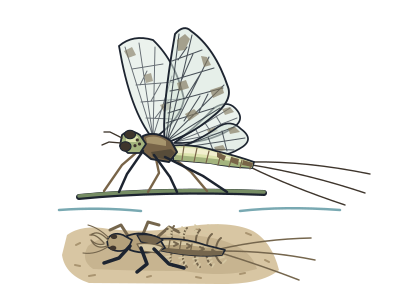
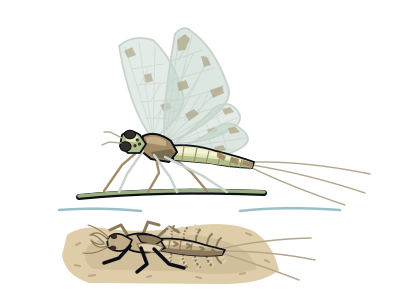
The green drake mayfly spends about two years underwater, then just a few days with wings. Its flying life is only the final chapter, not its whole life. It shares the winged-insect branch of the family tree with dragonflies, locusts and beetles. Like dragonflies, it cannot fold its wings flat along its back, as many other insects can.
Underwater, the young mayfly is called a nymph. It digs a tube-shaped burrow in the river or lake bed. Moving its gills pumps water through this shelter. It feeds on tiny particles of once-living material, collecting or filtering them from the water.
When it leaves the water, its changes are not quite finished. It can already fly, yet it still sheds its outer covering once more before reaching its fully mature winged stage. A long underwater childhood ends with a very short time in the air.
No meals with wings
Neither winged stage eats. Their mouthparts no longer work.
Wings become clearer
The first winged stage has cloudy, grey-yellow-green wings. After the final skin change, the wings are clearer, with dark veins and patches.
Riverside resting places
Trees and shrubs beside the water provide places for winged mayflies to rest.