A species
Medicinal leech
Hirudo medicinalis
A worm that still works in hospitals
You and the medicinal leech meet in the Two-sided animals branch, shown at about 580 million years ago (on 11 November, in a calendar from life's shared ancestor to today).
Some modern hospitals keep a surprising helper: a blood-drinking worm. When surgeons reattach a finger or move a patch of skin, fresh blood can flow in but sometimes cannot drain out. The blood pools and the tissue is at risk. A leech placed on the spot feeds for about 30 to 90 minutes, and the bite can keep oozing for up to a day. This drains the pooled blood until the patient's own veins regrow and take over. Each leech is used only once. Most hospital leeches turn out to be a very closely related species, but they do the same job.
The trick is in its spit. Leech saliva holds about 60 proteins. One of them stops blood from clotting. Others widen blood vessels and stop the tiny clotting bits in blood from clumping together. The bite is usually painless.
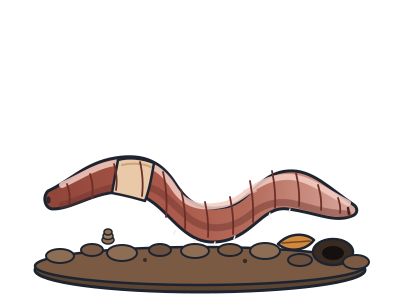
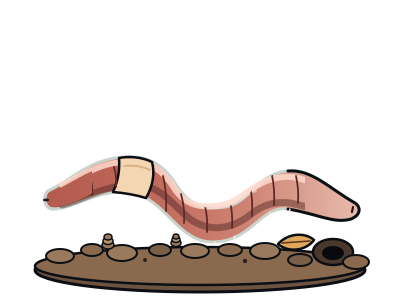
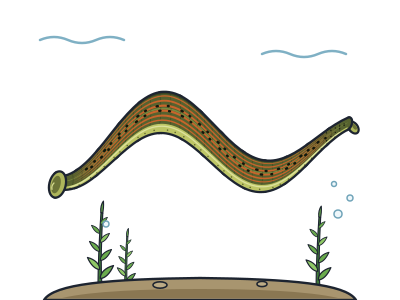
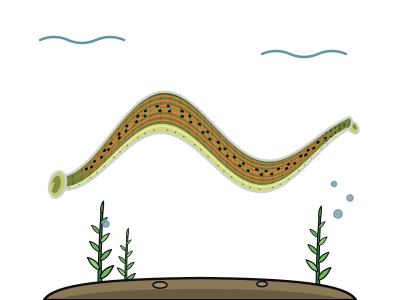
This leech is a segmented worm, a relative of the earthworm in your garden. Its soft body is made of 33 or 34 segments. It has a sucker at each end. On land it loops along like an inchworm, and in water it swims with smooth waves.
In the wild it lives in shallow, weedy, muddy ponds and marshes across Europe and into Asia. Huge numbers were collected for medicine in the 1800s. Along with habitat loss, this has made it rare in many places, such as the UK.
A bite with a signature
It has three jaws carrying about 100 tiny teeth in all. Its bite leaves a mark like an upside-down Y inside a circle.
Ten eyes
It has five pairs of tiny eyes at its front end, ten in total.
Male and female at once
Every medicinal leech is both male and female. Its eggs develop in a cocoon laid in damp ground just above the water, and the young hatch after about two weeks.