A species
Japanese giant salamander
Andrias japonicus
A river giant that breathes through its wrinkles
You and the japanese giant salamander meet in the Four-limbed animals branch, shown at about 350 million years ago (on 1 December, in a calendar from life's shared ancestor to today).
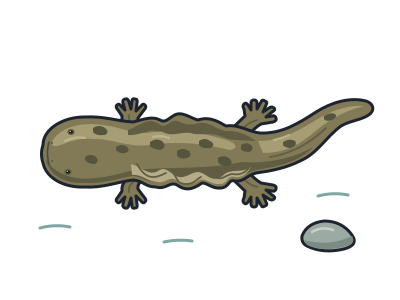
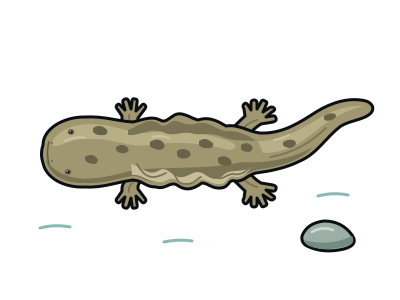
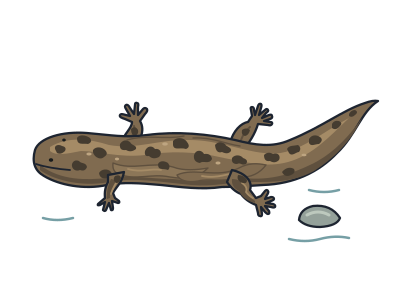
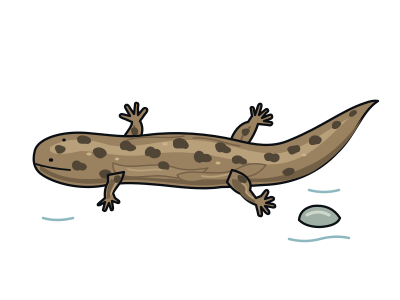
Up to about 1.5 metres long—roughly the height of a young teenager—this river giant breathes mainly through its wrinkly skin. It is an amphibian, not a fish or lizard. The North American hellbender belongs to the same salamander family, alongside the Japanese and Chinese giant salamanders.
Those loose skin folds provide extra surface for taking oxygen from the water. Cool, flowing rivers and streams supply the oxygen it needs. Skin breathing does not mean it stays underwater forever: it also comes to the surface for air. And that headline size is a maximum. Many individuals measure about 60–70 centimetres.
Mostly active at night, it usually shelters beneath stream rocks during daylight. It normally walks along the bottom, though it can swim short distances by moving its body from side to side. Poor eyesight is balanced by smell and an ability to detect movements in the water.
Big pepper fish
When disturbed, it can release sticky white mucus with a pepper-like smell. Its Japanese name means “big pepper fish”.
A long life in care
Some individuals have lived for more than 50 years in human care.
A varied menu
It eats fish, insects, crayfish and snails.