A species
Hellbender
Cryptobranchus alleganiensis
Meet the stream giant nicknamed the snot otter.
You and the hellbender meet in the Four-limbed animals branch, shown at about 350 million years ago (on 1 December, in a calendar from life's shared ancestor to today).
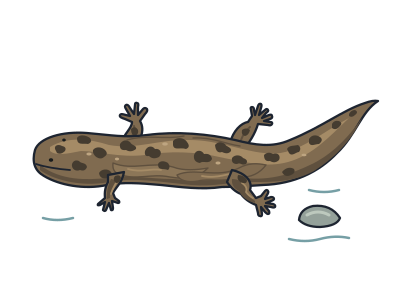
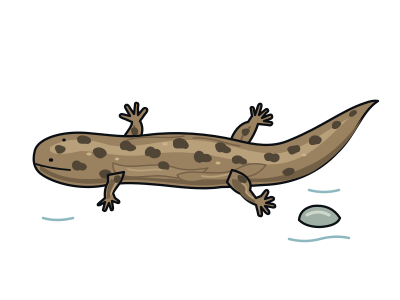
A flat, wrinkly giant of American streams, the hellbender has an unforgettable nickname: the snot otter. But it is a salamander, not an otter. Its family includes the Japanese and Chinese giant salamanders. That makes this slippery stream dweller part of a giant-salamander family found on opposite sides of the Pacific.
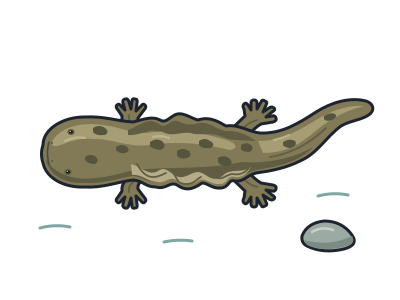
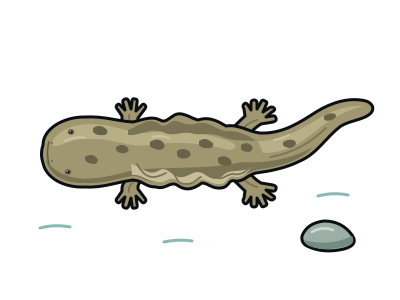
Its broad, flattened head, short legs and paddle-like tail suit life in flowing water. Loose folds of skin hang along its sides. Although it has lungs, it gets most of its oxygen through its skin. Cool, clean water rich in oxygen is essential, and large rocks provide places to shelter.
By day, a hellbender usually stays hidden beneath a rock. After dark, it comes out to hunt, mainly for crayfish, though it also eats other small water animals. It usually lives alone and may defend its shelter rock against another hellbender.
Count the toes
Each front foot has four toes, while each back foot has five.
A changing youngster
Young hellbenders have gills outside their bodies, but lose them as they grow.
A riverbed walker
A hellbender often walks along the river bottom rather than swimming.