A species
Lab water bear
Hypsibius exemplaris
A tiny lab animal with a remarkable drying trick.
You and the lab water bear meet in the Two-sided animals branch, shown at about 580 million years ago (on 11 November, in a calendar from life's shared ancestor to today).
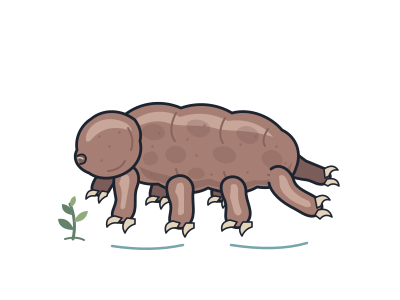
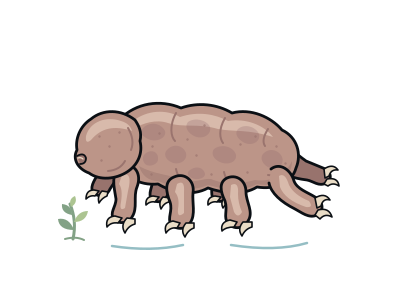
Scientists breed this tiny water bear in large numbers to study how an animal can dry out and become active again when water returns. But its fellow water bear shown beside it on the tree can survive much faster drying. Belonging to the same animal group does not mean having the same survival skills.
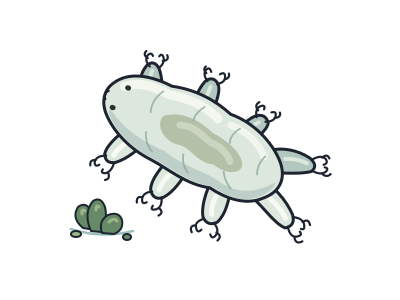
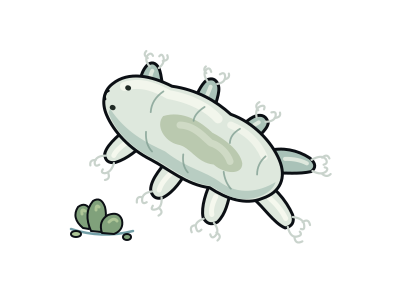
This species needs time to prepare as its surroundings dry. It can pull its head and eight short legs into a compact resting shape called a tun. When water returns, it can recover from this dormant state. That is what “coming back to life” means here: it has not returned from the dead.
Under a microscope, its body is almost see-through, with tiny claws at the ends of its legs and two small eyespots near the front. It eats algae, which can show through its body. Researchers also study this little animal to learn how animals develop and evolve—not just how they survive drying.
A fairly new name
Scientists formally recognised this lab animal as a separate species in 2018.
No male needed
Females can produce young without their eggs being fertilised by a male.
Eggs in a shed coat
Females lay smooth eggs inside the outer covering they shed as they grow.