A species
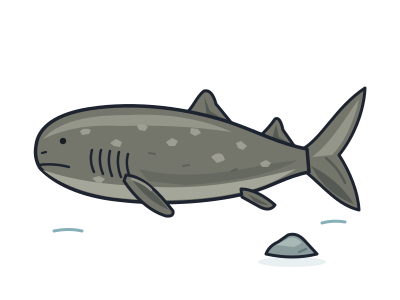
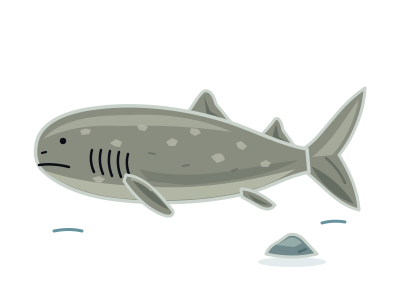
Greenland shark
Somniosus microcephalus
An Arctic giant living life in the slow lane
You and the greenland shark meet in the Jawed vertebrates branch, shown at about 465 million years ago (on 21 November, in a calendar from life's shared ancestor to today).
This slow Arctic giant may live about 270 years or more, making it the longest-lived known vertebrate: an animal with a backbone. Its lifespan is an estimate, not a confirmed birthday. It belongs to the sleeper shark family. Genetic evidence points to the Pacific sleeper shark as its sister species—a closer relative than the great white or other sharks shown beside it here.
Its home stretches across the North Atlantic and neighbouring Arctic seas, far beyond Greenland. It uses coastal waters as well as the deep ocean, and appears to prefer water around 0–5°C. A bulky body, blunt snout and tiny eyes give this shark a very different look from a great white.
Scientists estimated its age by carbon dating proteins in its eye lenses that formed before birth. Its exceptionally slow growth makes accidental capture in fishing gear especially concerning: a shark lost today cannot quickly be replaced.
Two kinds of teeth
Its upper teeth are narrow and pointed. Its lower teeth are broad and fit together.
Born swimming
Females give birth to live young rather than laying egg cases on the seabed.
Larger females
Females grow larger than males.
Next to it on the tree
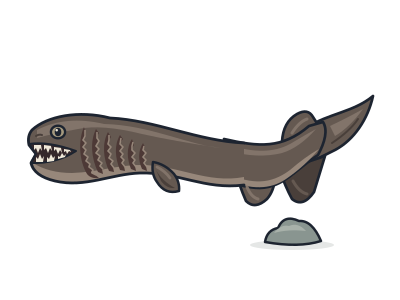
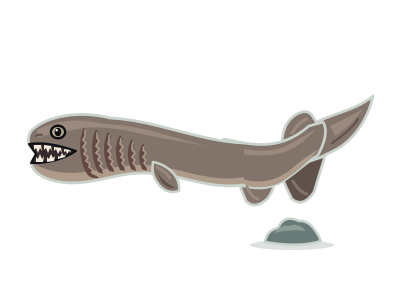
- Frilled sharkAn eel-like deep-sea shark with 300 trident-shaped teeth and frilly gills.
- Spiny dogfishA small shark with one of the longest pregnancies of any animal: about two years.
- AngelsharkA flat shark that looks like a ray; once common in Europe, now mostly found around the Canary Islands.
- Longnose sawsharkHas a toothed saw for a snout with two long whiskers, like a sawfish but a true shark.
- Dwarf lanternsharkThe smallest shark known, about the length of a pencil, with a glowing belly.