An extinct group
Graptolites †
Graptoloidea
Drifting animal colonies that left pencil marks in stone
Lived about 491–411 million years ago.
You and graptolites meet in the Starfish, sea squirts and us branch, shown at about 560 million years ago (on 13 November, in a calendar from life's shared ancestor to today).
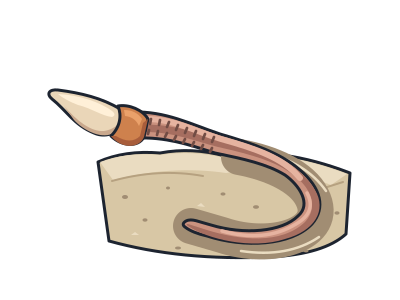
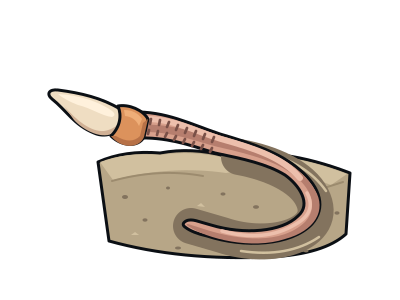
Graptolite fossils often looked like shiny pencil marks on dark rock. But these marks recorded colonies of animals, not scratches or plants. Their family connection was surprising too: they belonged to the same wider animal group as acorn worms. A calibrated fossil chronology placed their history from roughly 490 million years ago into the Early Devonian.
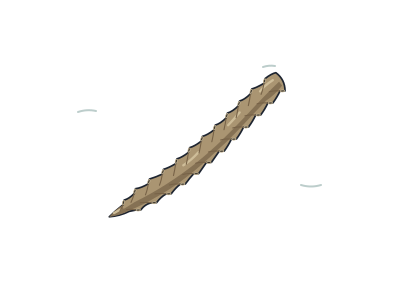
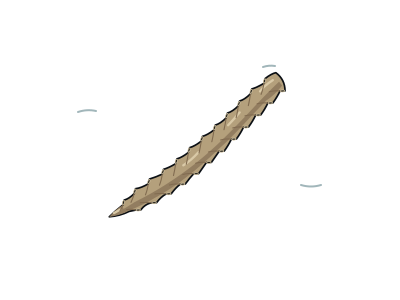
Each colony contained many tiny animals linked together. They occupied connected tubes along branches, with repeated openings that gave some colonies a saw-toothed outline. The floating group shown here lived suspended in seawater, rather than attached to the seabed. Its animals filtered small food particles from the water.
The fossils usually preserved flattened colony housings, rather than complete soft animals. Those housings recorded distinctive shapes that changed quickly through time. This made graptolites useful guides for dating rocks: some fossil-based intervals covered only a few hundred thousand years. A small mark in shale could therefore provide a surprisingly precise clue to a rock layer's age.
A name like handwriting
Their name meant ‘writing on the rock’.
More than saw blades
Some colonies resembled two-pronged tuning forks; others formed single straight, curved or coiled branches.
A schoolteacher's clues
Charles Lapworth, a schoolteacher in Scotland, used graptolite shapes to untangle the order of rock layers around Dob's Linn.