A species
Acorn worm
Saccoglossus kowalevskii
A soft sea worm with clues to the history of our throat
You and the acorn worm meet in the Starfish, sea squirts and us branch, shown at about 560 million years ago (on 13 November, in a calendar from life's shared ancestor to today).
This soft worm carries a surprising clue to how our throat began. Its throat has repeated openings called gill slits. Scientists compare these openings, and the genes involved in building them, with features in our wider animal family. The connections help researchers reconstruct inherited features of the throat.
That does not make this worm our ancestor. It is a living relative on a separate branch of the family tree. Its wider group, the acorn worms and their kin, is most closely related to the group containing starfish and sea urchins. A worm-shaped body can hide an unexpected family connection.
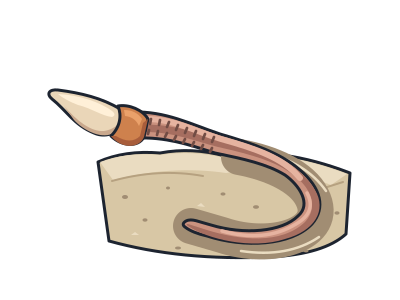
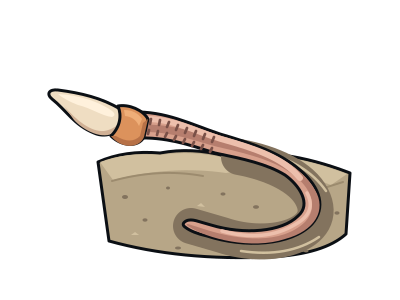
This animal lives in sandy or silty coastal ground, mostly hidden inside a burrow. Its muscular snout helps it dig and may be the only part showing above the surface. Despite the name, this species has a long, pointed snout rather than a perfectly round acorn shape.
Three body sections
Its body has three main regions: a snout, a short collar and a long trunk.
Tiny moving hairs
Tiny beating hairs help it move and spread mucus across its body.
Small meals
It gathers tiny food particles from the seabed, including algae and bacteria.