A species
Emperor dragonfly
Anax imperator
An aerial hunter that catches meals on the wing.
You and the emperor dragonfly meet in the Two-sided animals branch, shown at about 580 million years ago (on 11 November, in a calendar from life's shared ancestor to today).
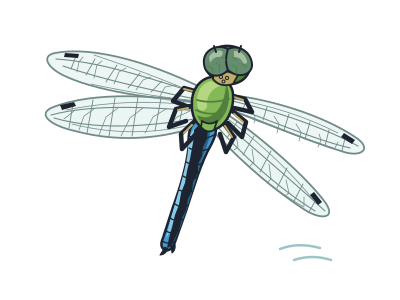
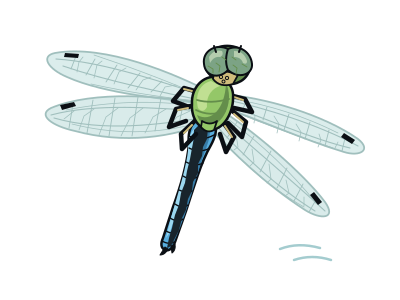
The emperor dragonfly catches insects in mid-air and can eat while flying. Butterflies and even smaller dragonflies are on its menu. This hunter is itself a close relative of the delicate-looking damselflies. Both belong among the winged insects, alongside familiar neighbours such as butterflies and grasshoppers.
Its four wings can move independently, helping it hover and change direction. To grab a flying meal, it sweeps its legs forwards and upwards like a catching net. Not every meal is eaten on the move: larger prey may be eaten while resting.
Life begins in a very different world. In Britain, young emperors usually spend about two years developing underwater, among water plants. Unlike butterflies, they have no pupal stage between youngster and adult. Instead, they climb onto vegetation for their final moult, shedding their outer covering to become winged adults. This change commonly starts around dusk, with the first flight by dawn.
A patrol above the pond
Males defend territories, flying about 2–3 metres above the water and chasing away competing dragonflies.
Eggs tucked into plants
Females lay eggs alone, inserting them into underwater plant tissue, sometimes well away from shore.
Moving north
A warming climate has helped emperor dragonflies spread further north in Britain.
Next to it on the tree
- Southern hawkerA curious garden dragonfly that often flies right up to look at people.
- Broad-bodied chaserA fat-bodied dragonfly whose males turn powder blue and are often first to find a new pond.
- Common darterA small red dragonfly that basks on fences and flies late into autumn.
- Globe skimmerCrosses the Indian Ocean on the wind, the longest known insect migration across generations.
- Golden-ringed dragonflyA long black-and-yellow dragonfly that patrols moorland streams.
- Giant petaltailOverall the biggest dragonfly alive, with a 16 cm wingspan, from an ancient family whose young live in burrows.
- Common green darnerA North American dragonfly that migrates south each autumn, like the monarch.