A species
Common earwig
Forficula auricularia
Tail pincers and a surprisingly caring mother.
You and the common earwig meet in the Two-sided animals branch, shown at about 580 million years ago (on 11 November, in a calendar from life's shared ancestor to today).
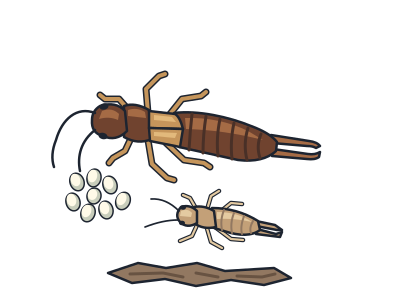
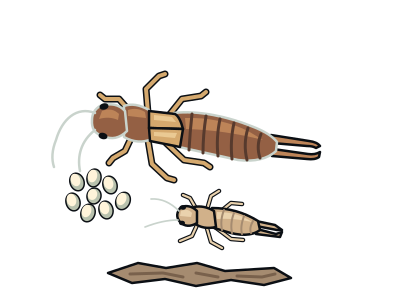
The common earwig has pincers on its tail, but its family life may be the bigger surprise. A mother guards her eggs and newly hatched young instead of leaving them alone. Her care includes feeding: she carries food into the nest and brings up swallowed food for the youngsters to eat.
Like dragonflies and locusts, this animal belongs to the winged insects. It may look almost wingless, yet adults hide working wings beneath short wing covers. These wings stay tightly folded away, and common earwigs rarely fly. An adult can also bend its flexible body forwards or sideways to bring its tail pincers towards a threat.
At night, common earwigs search for both plant food and small animals. In a garden, that can mean chewing flower petals, but also eating aphids. So an earwig visiting your flowers is not simply a plant-eater: it may also be feeding on the small insects around them.
A clue in the pincers
Adult males usually have strongly curved pincers. Adult females have almost straight ones.
Tiny pale eggs
The eggs are pearly white and oval, about 1 millimetre long when laid.
Winter shelter
Adults survive winter in soil and other sheltered places.