A species
Collared flagellate
Salpingoeca rosetta
A single cell that is one of animals' closest living cousins
You and the collared flagellate meet in the Animals and their single-celled cousins branch, shown at about 1 billion years ago (on 6 October, in a calendar from life's shared ancestor to today).
Some of your closest living relatives outside the animal kingdom are just single cells. This tiny sea creature belongs to the collared flagellates, a group thought to be the closest living relatives of all animals, from sponges to people. They are cousins, not ancestors. Animals and collared flagellates both come from the same single-celled ancestor. They even share genes with animals that help cells send signals and stick together.
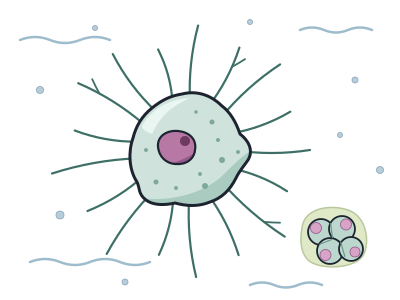
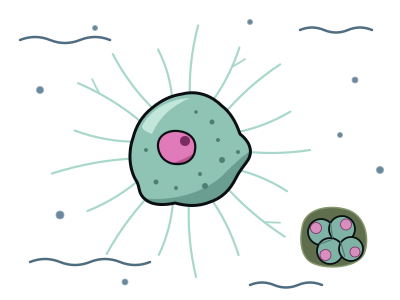
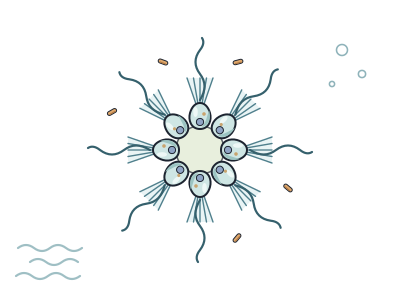
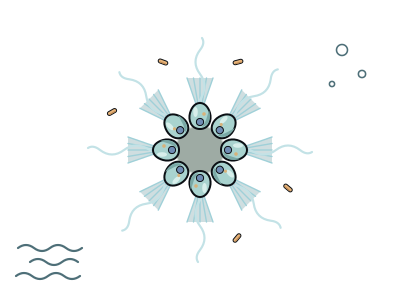
Each cell has one long, whip-like tail. Around the base of the tail stands a collar of thin strands, like a tiny funnel. The beating tail makes a current that carries water through the collar, and bacteria get caught on it and eaten. Sponges have cells that look and work in a very similar way.
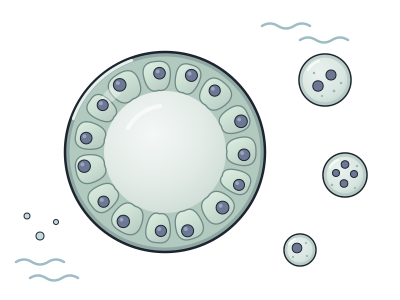
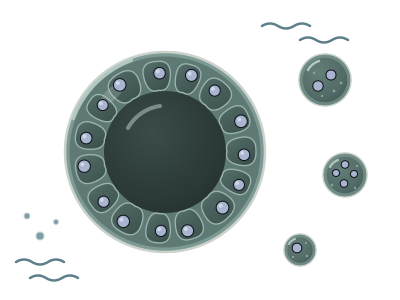
Here is the surprise. Bacteria are not only its food. They can also change how it lives. One kind of bacterium it eats gives off a fatty chemical that makes the cell grow into a colony. The colony is a small ball of cells shaped like a flower head.
Scientists found this by accident. When they added a treatment that kills bacteria to their cultures, the cells stopped forming colonies. That set them hunting for the bacterium responsible.
Bacteria can make it mate
A different sea bacterium can make this species mate within hours. It was the first known case of a bacterium setting off mating in a complex-celled living thing.
A link in the food chain
Collared flagellates are food for small ocean animals such as krill. That way, food locked up in tiny bacteria gets passed up the food chain to bigger creatures.
No fossils
Collared flagellates have left no fossil record, so scientists study them using living cells and their genes.