A species
Cheetah
Acinonyx jubatus
The cat built for a breathtaking sprint
You and the cheetah meet in the Placental mammals branch, shown at about 95 million years ago (on 23 December, in a calendar from life's shared ancestor to today).
The cheetah is the fastest land animal, reaching about 100 km/h within seconds. Yet its closest living relatives are the puma and jaguarundi, not the similarly spotted leopard.
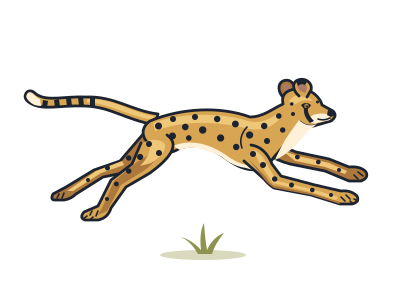
Its body stretches and gathers around a flexible backbone. A fast stride can cover about six to seven metres. Short claws pull only partly inside the paws, gripping the ground like spikes on running shoes. Its long, muscular tail helps it balance through sharp turns. Top speed lasts only briefly: a hunt also needs quick acceleration, braking and turning.
Cheetahs hunt mainly by sight, eating animals such as gazelles, hares and ground-dwelling birds. Adult females usually live alone unless they are raising cubs. Males may live alone or in small groups, often with brothers. Cubs stay with their mother for about 18 months, learning hunting and survival skills.
A cat that chirps
Cheetahs cannot roar. They purr, chirp, growl and hiss.
Spot the individual
Each cheetah has a different spot pattern, helping researchers recognise individuals.
A silvery start
Young cubs have a strip of long, silvery fur along their backs. It fades as they grow.